
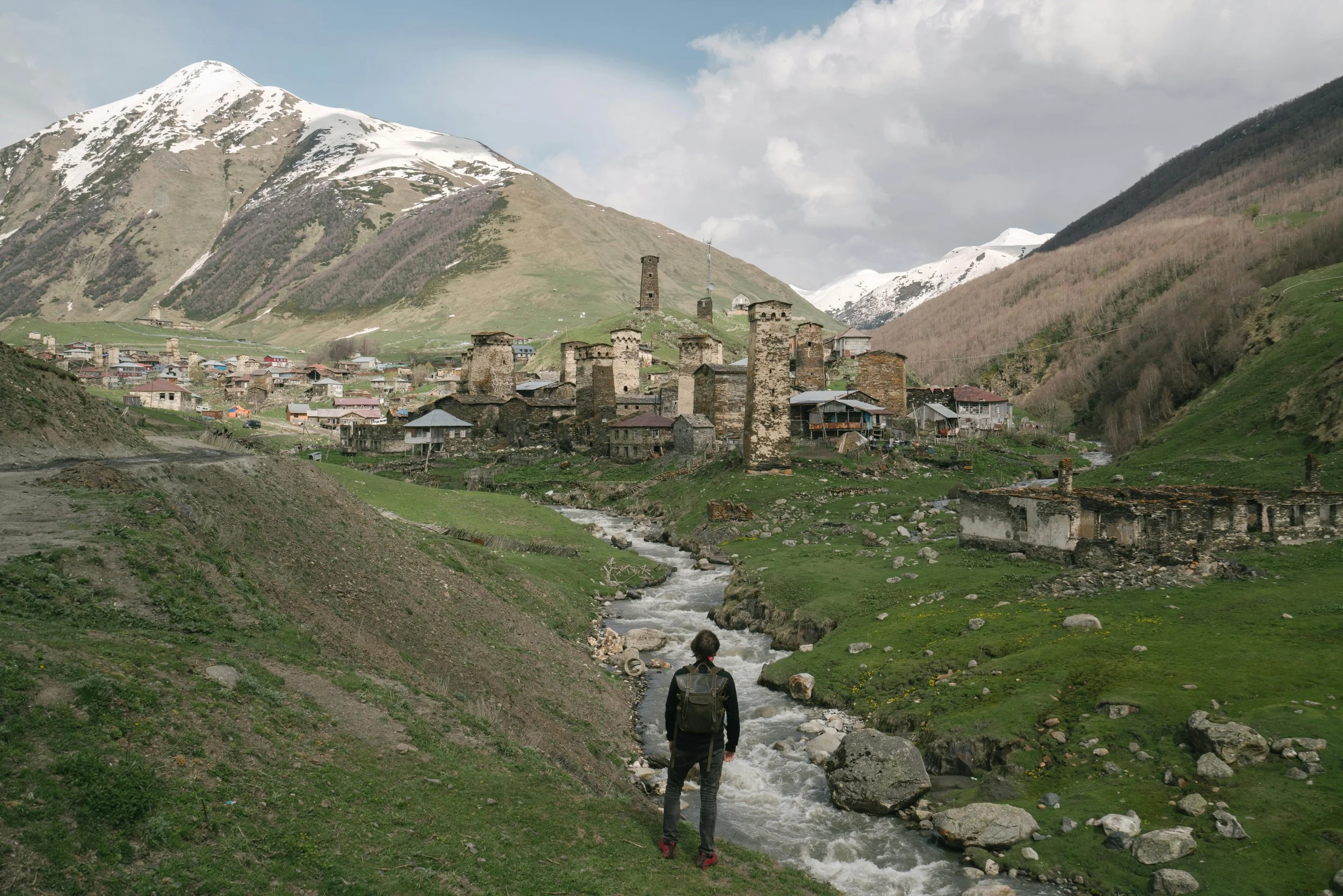
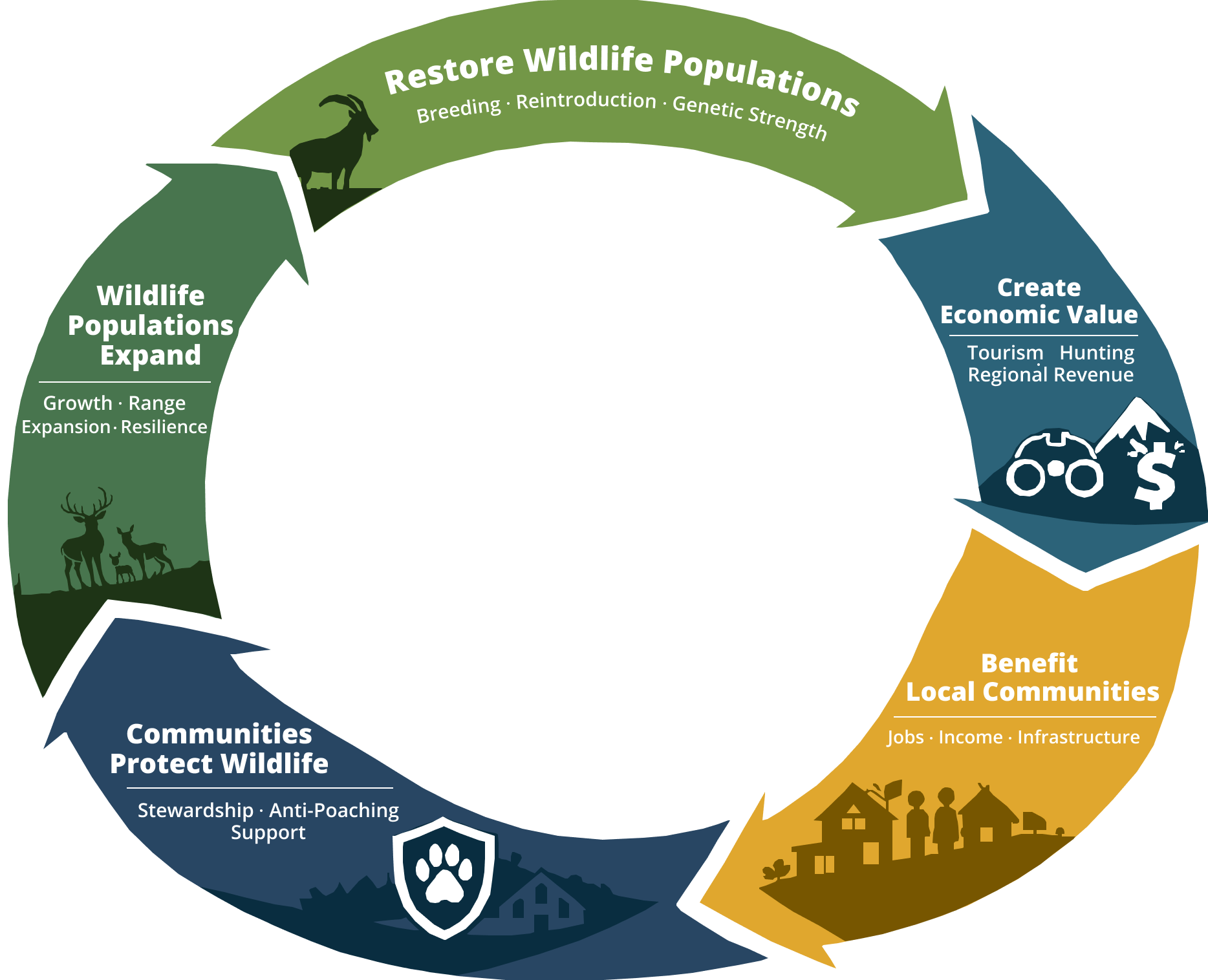
OUR Strategic Process
At Wild Giants, our focus is long term impact not short-term projects. We combine science, economics, and community partnerships to create self-funding conservation programs for endangered species that can endure for generations. Every step in our process is designed to ensure thriving wildlife and thriving people.
BREEDING & REWILDING
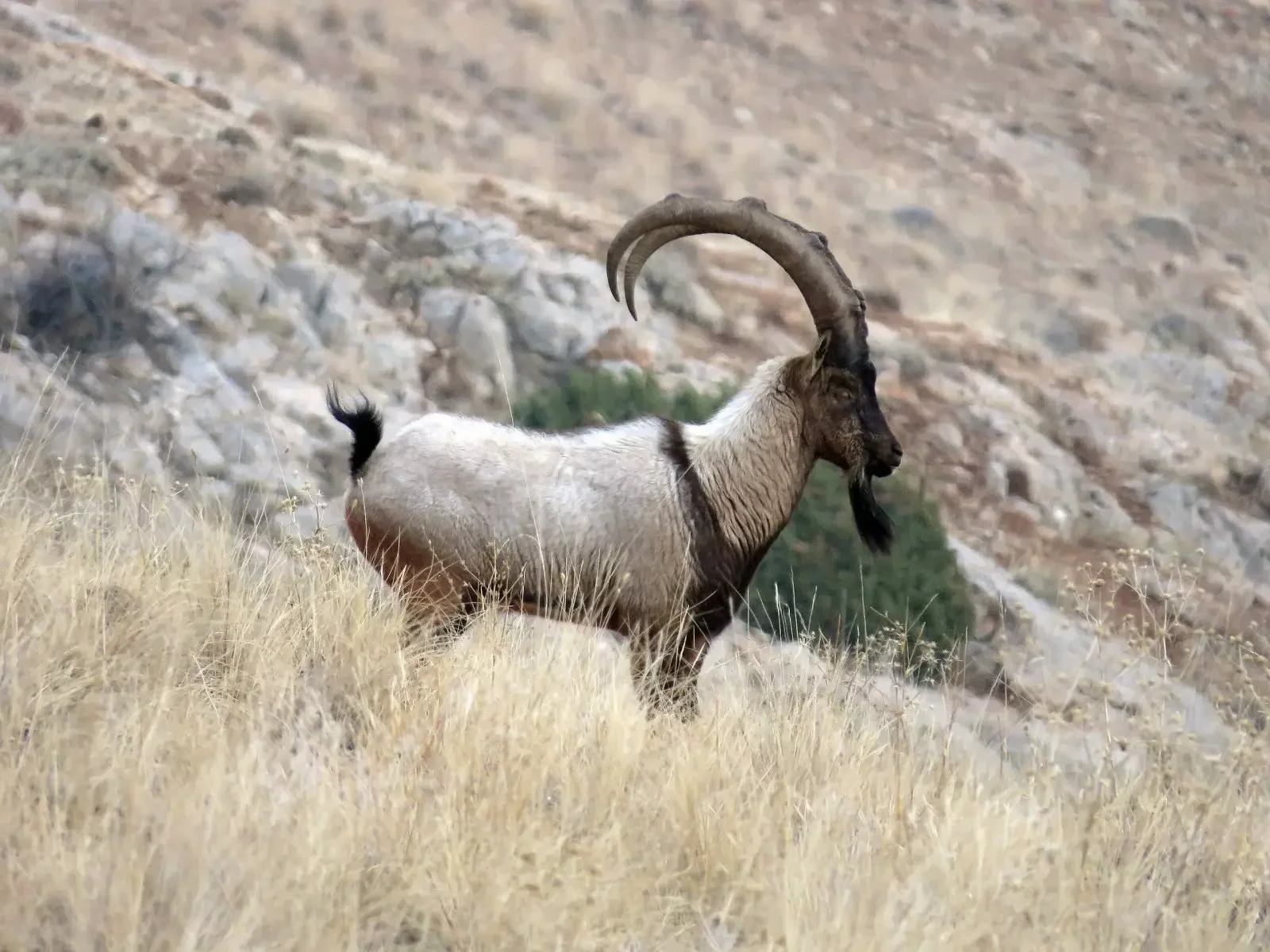
Sustainable wildlife breeding is a cornerstone of our restoration model. We develop genetically strong, resilient animals capable of restoring and connecting populations in strategic corridors and protected landscapes. These programs allow us to effectively reintroduce robust herds into historic habitats, accelerating the recovery of keystone species such as the Bezoar Ibex, Caucasian Tur, and Caspian Red Deer.
Tagged & Monitored
Every released animal is tracked in the wild.

Long-Term Research
Continual population studies & data.
Genetic Strength
Focus on healthy, resilient genetics.
Thriving Herds
Rebuilding robust, viable populations.
COMMUNITY PARTNERSHIP
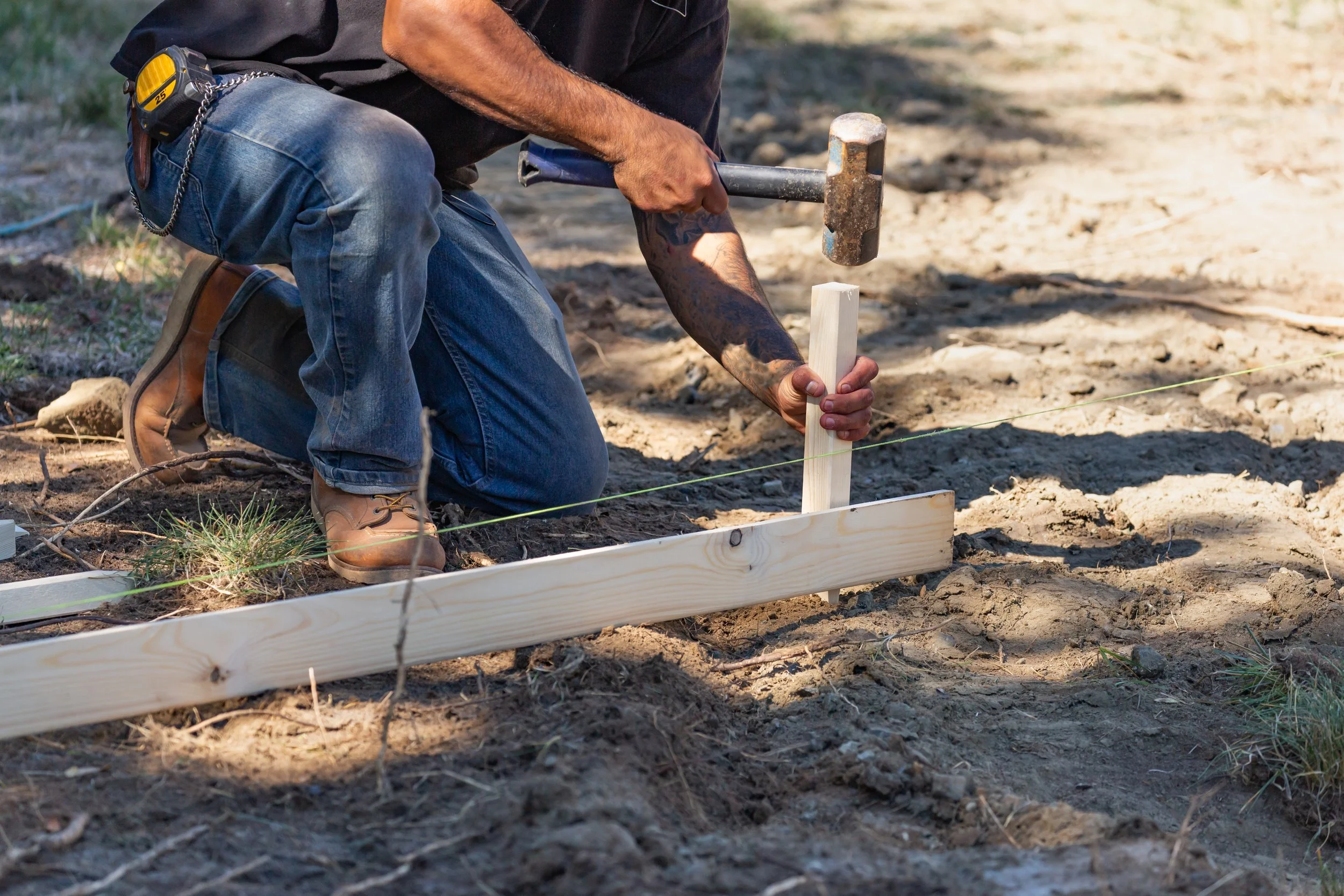
Why are local communities important in conservation? Conservation only succeeds when local communities are true partners. At Wild Giants, we work directly with community leaders to develop eco-tourism and conservation-based economic programs that generate sustainable income while minimizing human wildlife conflict. When communities benefit, they protect wildlife, turning stewardship into opportunity.
Guided wildlife experiences and mountain trekking programs
Conservation-driven hunting initiatives
Direct community employment and participation
Tangible value linked to healthy ecosystems
SUSTAINABLE REVENUE STREAMS
At Wild Giants, conservation is not constrained by grant cycles. It’s an economic system built to endure. By designing revenue directly into every restoration effort, we turn wildlife recovery into a durable economic engine. Profitable ventures around species restoration and habitat management allow conservation to expand over time rather than contract when funding slows.
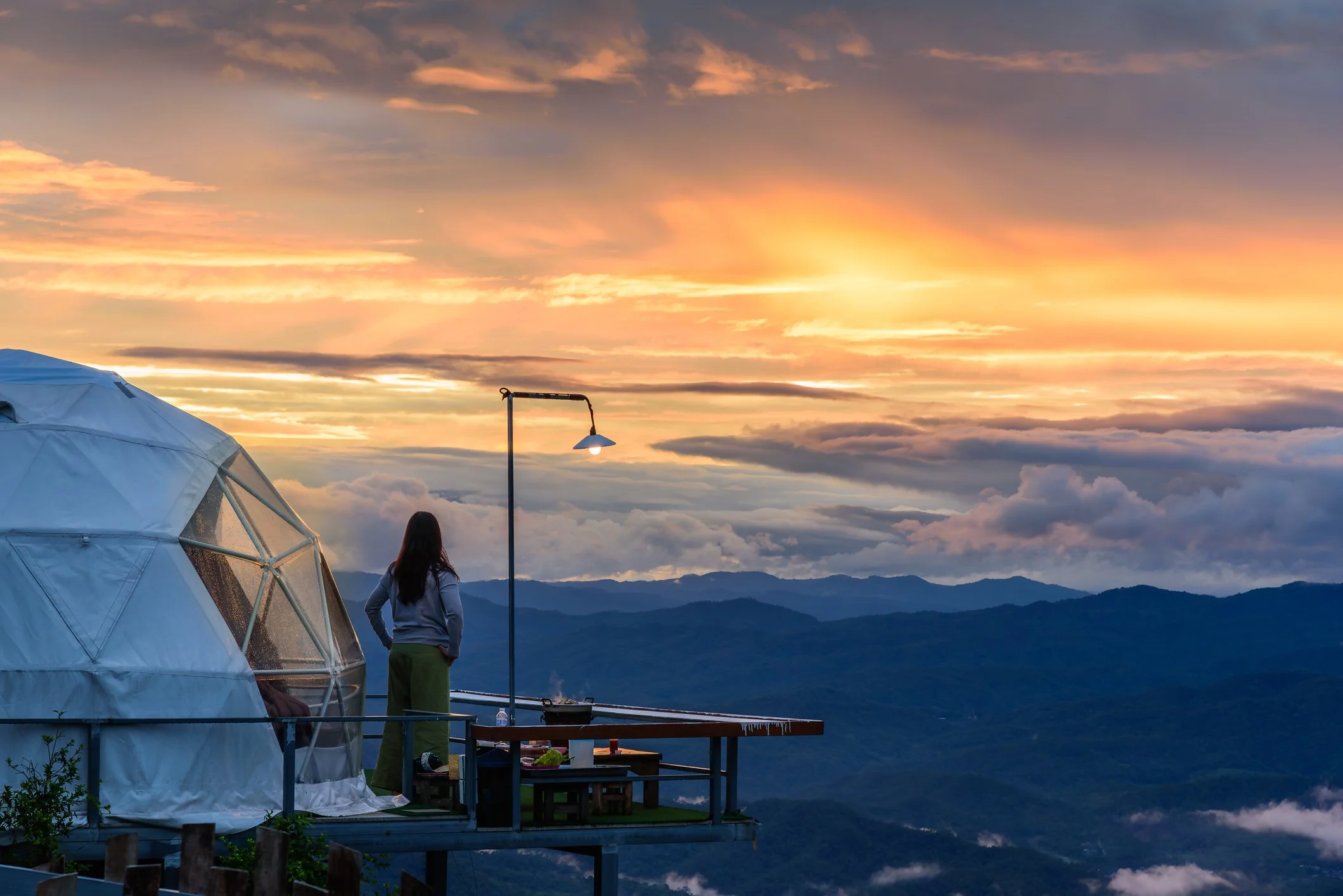
Eco-Tourism & Wildlife Experiences

Glamping, wildlife tours and mountain trekking connect people to rewilding efforts.
Revenue funds species reintroduction, habitat stewardship, and local community partnerships.
Want to learn more? Ask us!
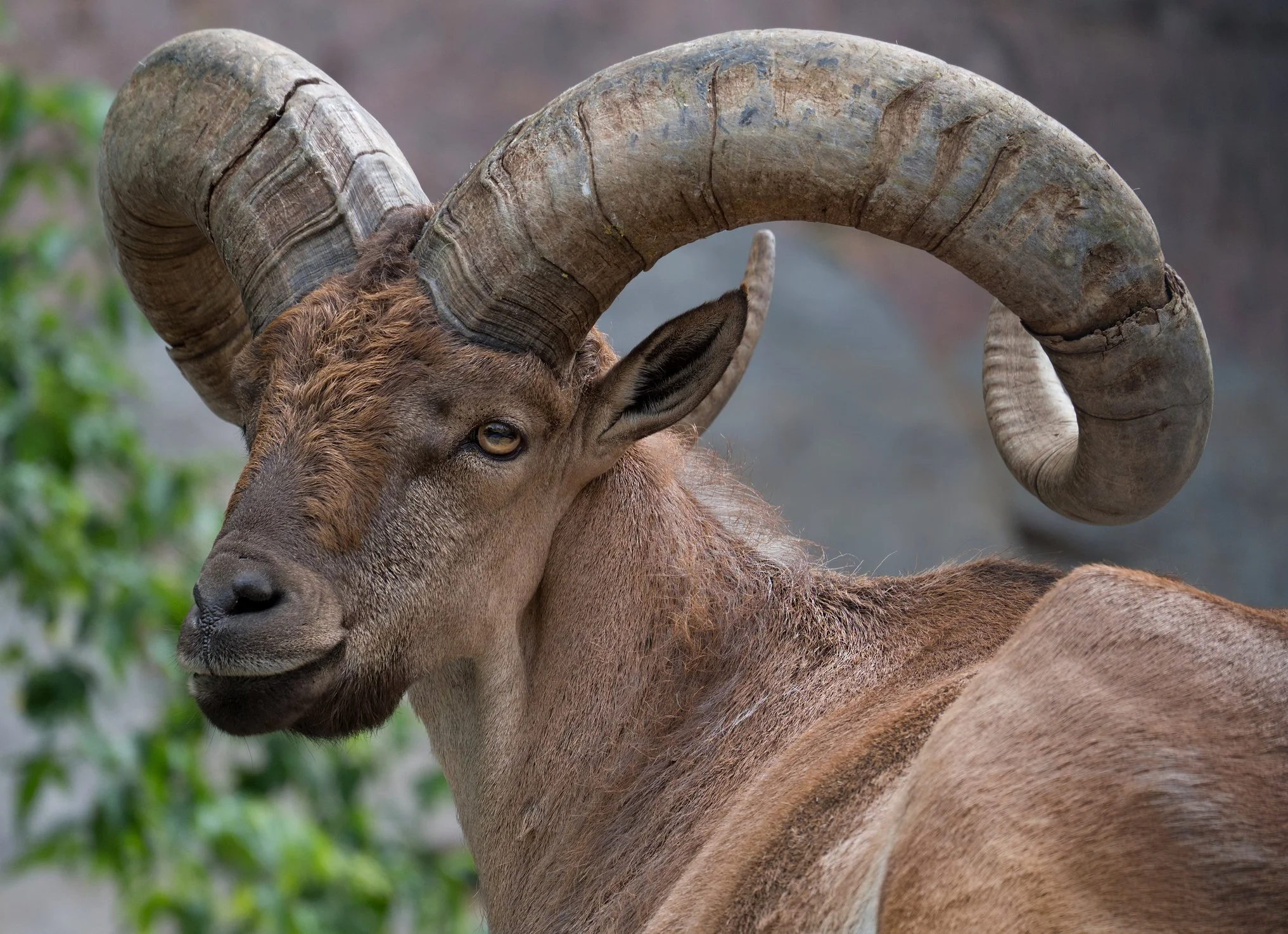
SUSTAINABLE, CONSERVATION-Driven Hunting

Carefully managed, ethically structured hunting supports population management and funding.
Older, post-breeding males are harvested, protecting future herd growth.
Revenue from regulated hunts funds habitat protection, anti-poaching, breeding programs, and community employment.
One harvested animal can support the restoration and protection of many others.
Frequently Asked Questions
Still have questions? Take a look at the FAQ or reach out anytime.
-
A sustainable wildlife conservation model is a system where conservation funds itself over time. By restoring wildlife populations and creating economic value around them, these models become self-funding and reduce reliance on continuous donations and ensure long-term impact.
-
Rewilding-driven conservation focuses on actively restoring wildlife populations to landscapes where they once thrived. Unlike passive protection, it combines species recovery with economic systems that support long-term sustainability and growth.
-
Sustainable conservation creates direct economic opportunities for local communities through jobs, tourism, and conservation-based enterprises. As wildlife populations recover, they become valuable assets—providing ongoing income and creating strong incentives for long-term stewardship and protection.
-
When carefully regulated and science-based, hunting can generate significant revenue from a very limited number of animals. A single permit—typically for an older, non-breeding male—can fund habitat protection, anti-poaching efforts, and local livelihoods for an entire season. Because the financial return is high and the biological impact is low, this model creates strong, ongoing incentives to maintain healthy wildlife populations and protect them over the long term.
-
Breeding and rewilding accelerate wildlife recovery by actively rebuilding populations where natural recovery would be too slow or unlikely. By establishing healthy, genetically strong herds and reintroducing them into suitable habitats, this approach restores ecosystems faster, creates measurable results, and lays the foundation for long-term, self-sustaining conservation.
BE A WILD GIANTS PARTNER
Your flexible donation allows WILD GIANTS to support the people and programs that protect our wildlife.