
America’s Greatest Conservation Legacy
Celebrating 250 Years of Freedom and Stewardship
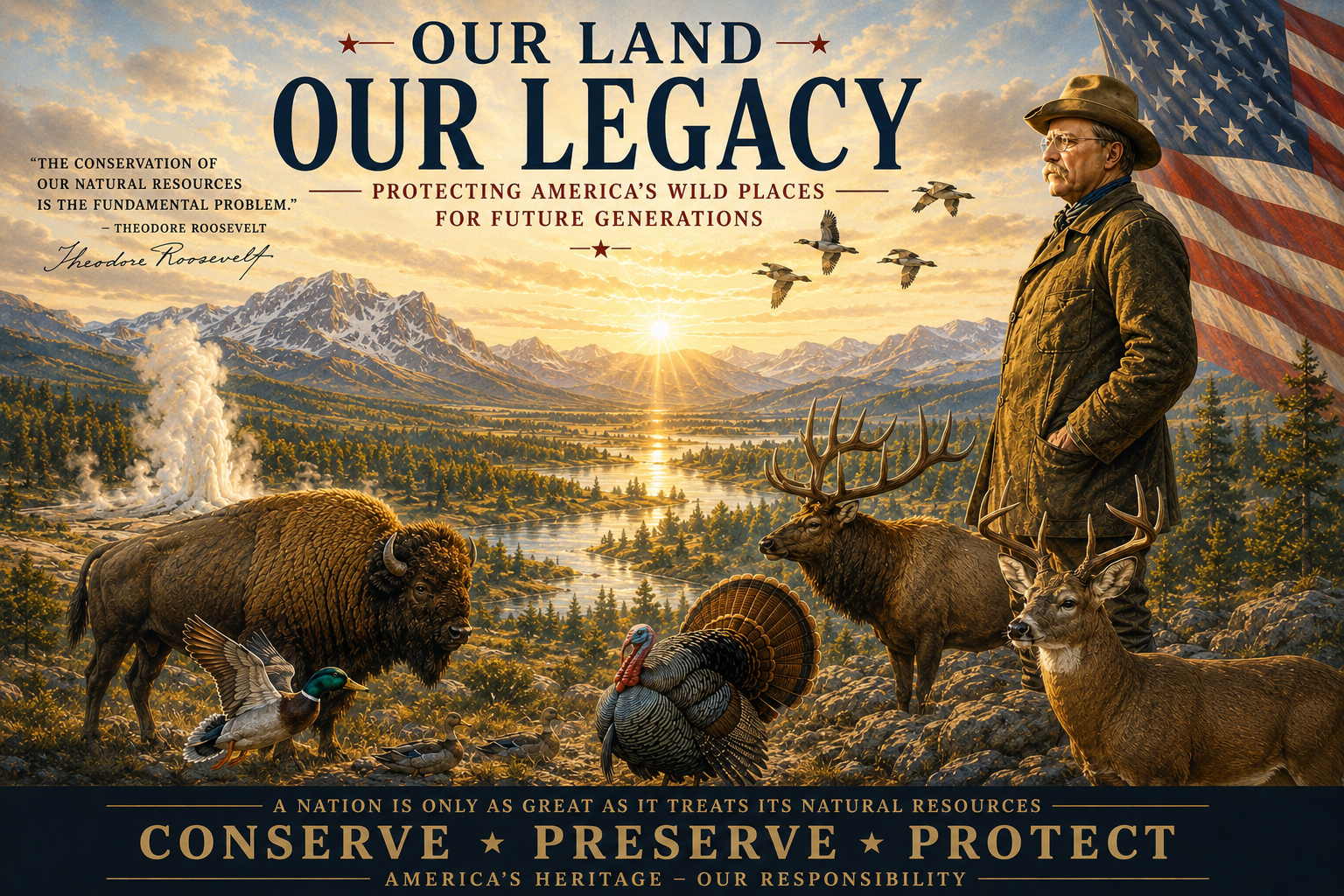
As the United States approaches its 250th birthday in 2026, Americans will rightly reflect on the principles that have made this nation exceptional: freedom, innovation, self-governance, and opportunity. Yet one of America’s most remarkable achievements is often overlooked.
The United States Created the most succesful wildlife conservation model in human history
While many nations have watched wildlife disappear under the pressures of development, overuse, and political instability, America built a system that not only preserved wildlife but restored it. Species once teetering on the brink of extinction now thrive. Vast landscapes have been protected. Hunters, anglers, conservationists, landowners, and everyday citizens have united around a common cause.
For 250 years, America has demonstrated that prosperity and conservation do not have to be opposing forces. In fact, when done correctly, they strengthen one another.
Today, organizations like Wild Giants Conservation Fund are carrying those same American conservation principles beyond America’s borders, applying lessons learned in the United States to restore wildlife in one of the world's most important but forgotten landscapes, the Caucasus Mountains.
The American Conservation miracle
At the turn of the 20th century, America faced a crisis.
Market hunting, unchecked development, and habitat loss had devastated wildlife populations. Whitetail deer had disappeared from many states. Wild turkey populations had collapsed. Elk, bison, waterfowl, and countless other species faced uncertain futures. Many nations would have accepted this decline as inevitable.
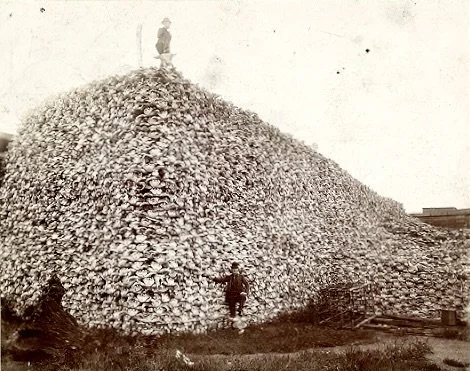
Throughout the late 1800’s and early 1900’s unregulated market hunting and indiscriminate development destroyed wildlife populations and the land they needed to thrive.
America Chose another path
Rather than locking wildlife away for the exclusive benefit of governments or elites, Americans developed what would become known as the North American Model of Wildlife Conservation, a revolutionary concept that recognized wildlife as a public trust belonging to all citizens.
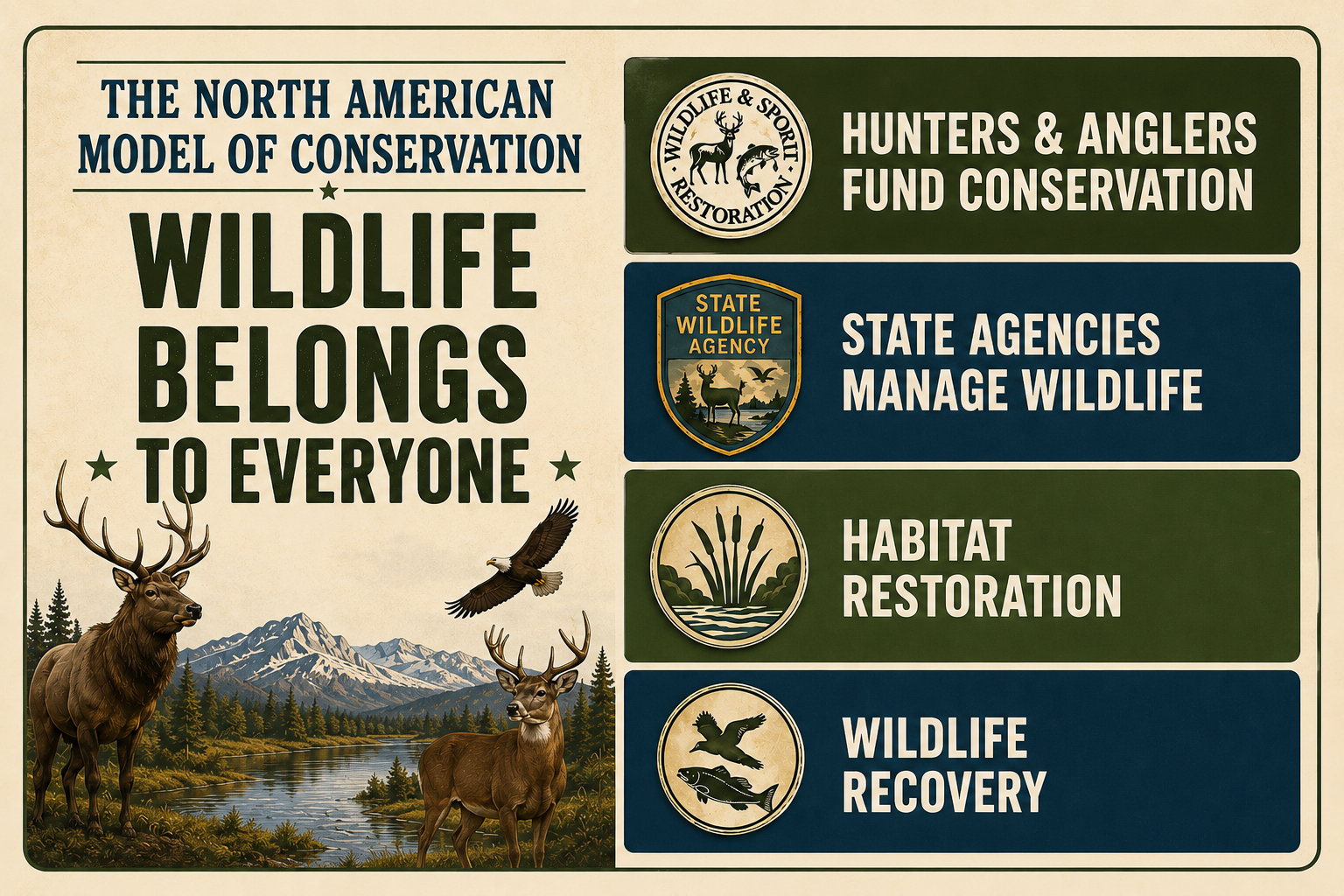
This simple but profound idea changed everything. Hunters became conservationists. Sportsmen became funders. State agencies became stewards. Wildlife became a resource worth restoring rather than exploiting. The results have been extraordinary.
Today, America supports more whitetail deer, wild turkey, elk, black bears, and waterfowl than existed a century ago. Entire ecosystems have recovered because citizens invested directly in conservation. No other nation has replicated this success at the same scale.
No figure embodies this legacy more than Theodore Roosevelt

Roosevelt’s experience as a hunter drove his vision of conservation.
A hunter, naturalist, explorer, and statesman, Roosevelt understood something many leaders of his era did not: conservation was not about preserving nature from people, it was about ensuring future generations could experience and benefit from the natural world. During his presidency, Roosevelt protected more than 230 million acres of public land. He established national forests, wildlife refuges, and monuments that continue to provide habitat for countless species today. His vision transformed conservation from a niche concern into a national priority. Roosevelt famously warned: "The nation behaves well if it treats the natural resources as assets which it must turn over to the next generation increased, and not impaired, in value." More than a century later, that principle remains the foundation of successful conservation efforts across America and around the world.
America's conservation leadership did not stop with Roosevelt
The United States pioneered an idea so powerful that nations around the globe eventually adopted it: the national park. When Yellowstone National Park was established in 1872, it became the world's first national park. It represented a radical new concept that certain landscapes possessed such ecological, cultural, and historical significance that they should be preserved for future generations. Today, nearly every nation on Earth operates some form of protected area system inspired by the American example. The national park movement became one of America's greatest exports. Millions of people worldwide enjoy protected lands because the United States demonstrated that conservation and national pride could coexist.
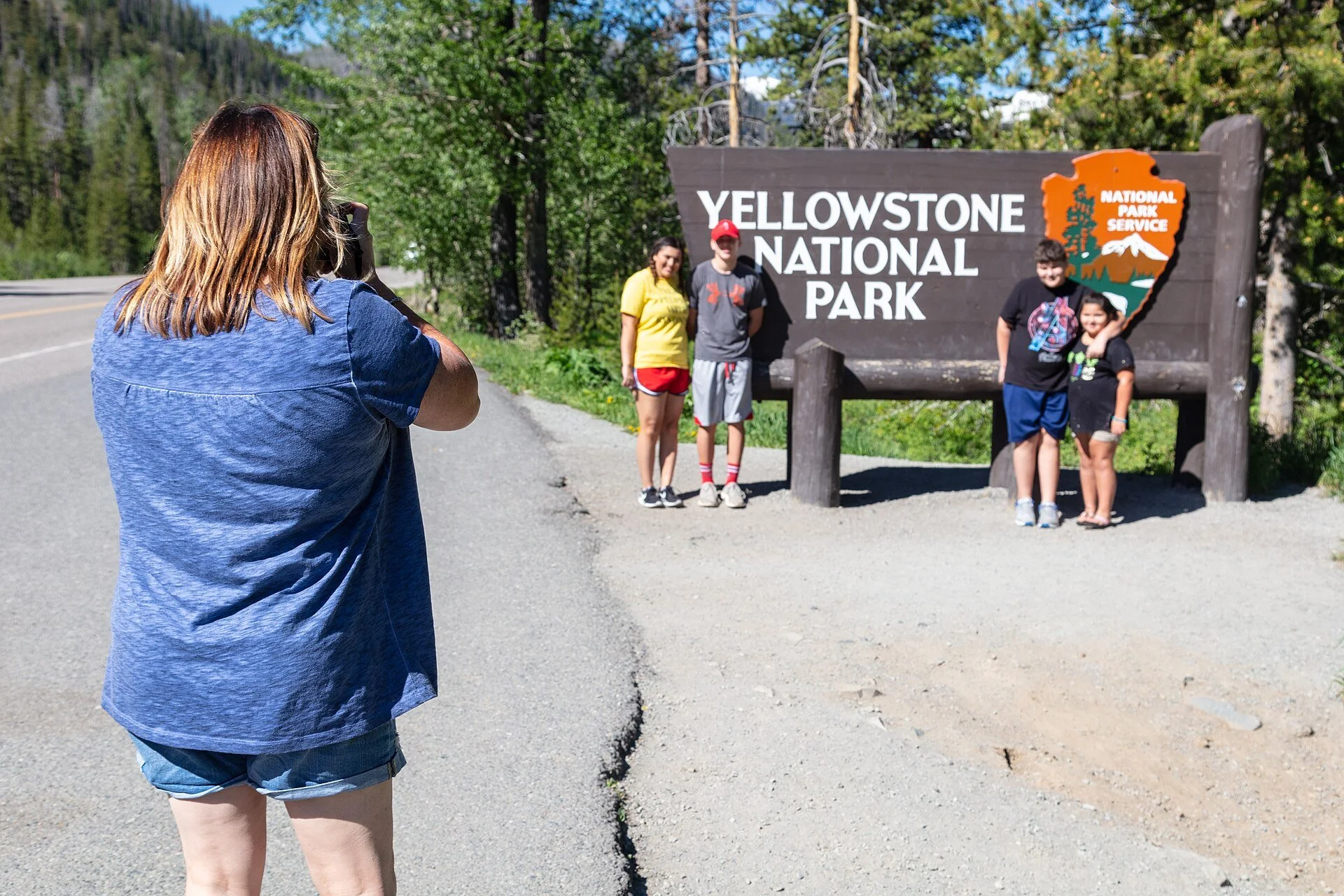
Established in 1872 as the world’s first national park, Yellowstone was set aside for the people to ensure its wildlife and ecological wonders would be preserved for generations. Today, it remains a cornerstone of American conservation, welcoming over 4.5 million annual visitors and serving as the blueprint for the 69 total national parks that exist today.
Built For Generational Impact
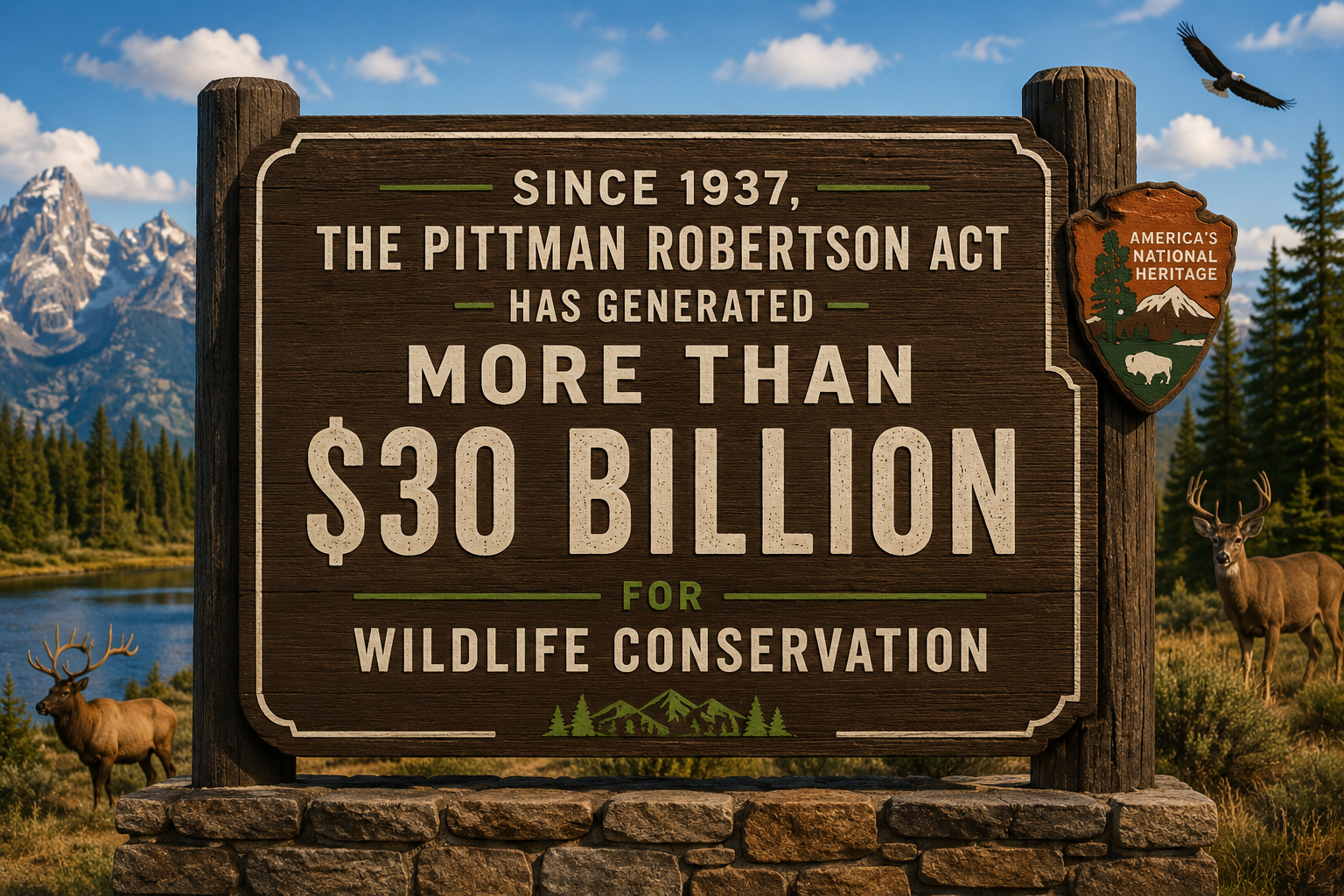
Perhaps no legislation better represents the genius of the American conservation model than the Federal Aid in Wildlife Restoration Act of 1937. Known simply as the Pittman-Robertson Act, this landmark law placed an excise tax on firearms, ammunition, and archery equipment. The funds generated would be directed back into wildlife conservation, habitat restoration, research, and hunter education. The brilliance of the system was simple: Those who used and valued wildlife paid directly for its restoration. Since its passage, Pittman-Robertson has generated billions of dollars for conservation and helped restore countless species across North America. The wild turkey's recovery. The resurgence of elk herds. Improved habitat for deer, waterfowl, and upland birds. Much of it traces back to a funding model that aligned conservation with sustainable use. This is one of the greatest conservation success stories ever created. And it remains uniquely American.
Conservation Must Create Value
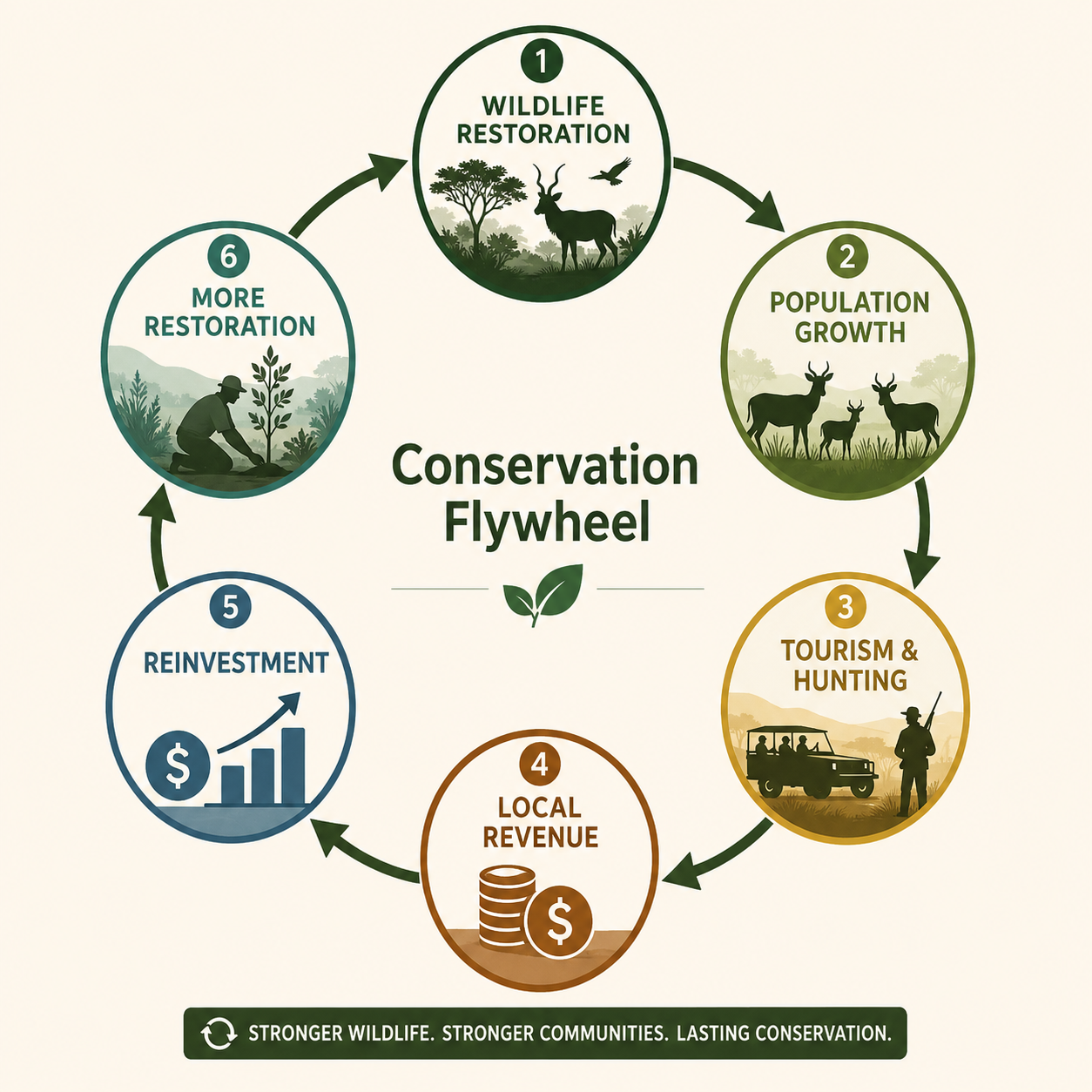
One of the core lessons America has taught the world is that conservation must create value if it is to endure. When wildlife generates benefits for local communities through recreation, tourism, hunting, and outdoor industries, people become invested in its survival. This is not merely theory. It is the foundation upon which America's wildlife recovery was built. Hunters, anglers, outdoor enthusiasts, and conservation organizations collectively fund and support the vast majority of wildlife management across the country. The result is a system capable of sustaining itself across generations.
This same philosophy is central to the work being done by Wild Giants. Wild Giants believes conservation succeeds when local communities become partners in restoration and when wildlife creates long-term value for the people living alongside it. Through rewilding, community partnerships, ethical hunting models, and eco-tourism, the organization is building a self-sustaining approach designed to restore wildlife while creating opportunity for local residents.
The Caucasus Mountains sit at the crossroads of Europe and Asia
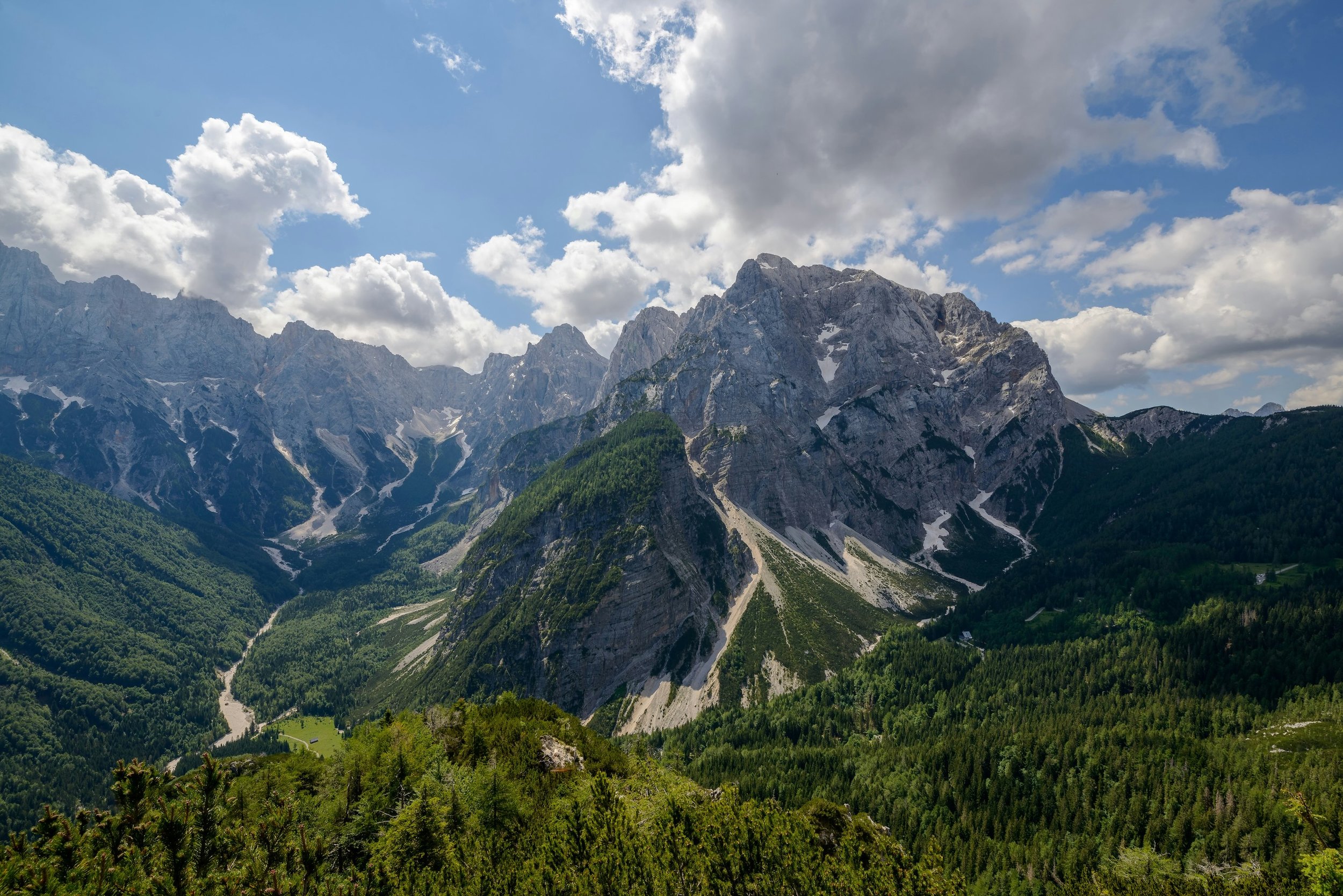
This is an incredible landscape of towering peaks, rugged valleys, and extraordinary biodiversity. Yet much of the region's iconic wildlife has been dramatically reduced or eliminated over generations. Species such as the Bezoar Ibex, Caucasian Tur, and Persian Leopard now survive only in fragmented populations. In many ways, it mirrors the state of wildlife in America in the early 1900s.
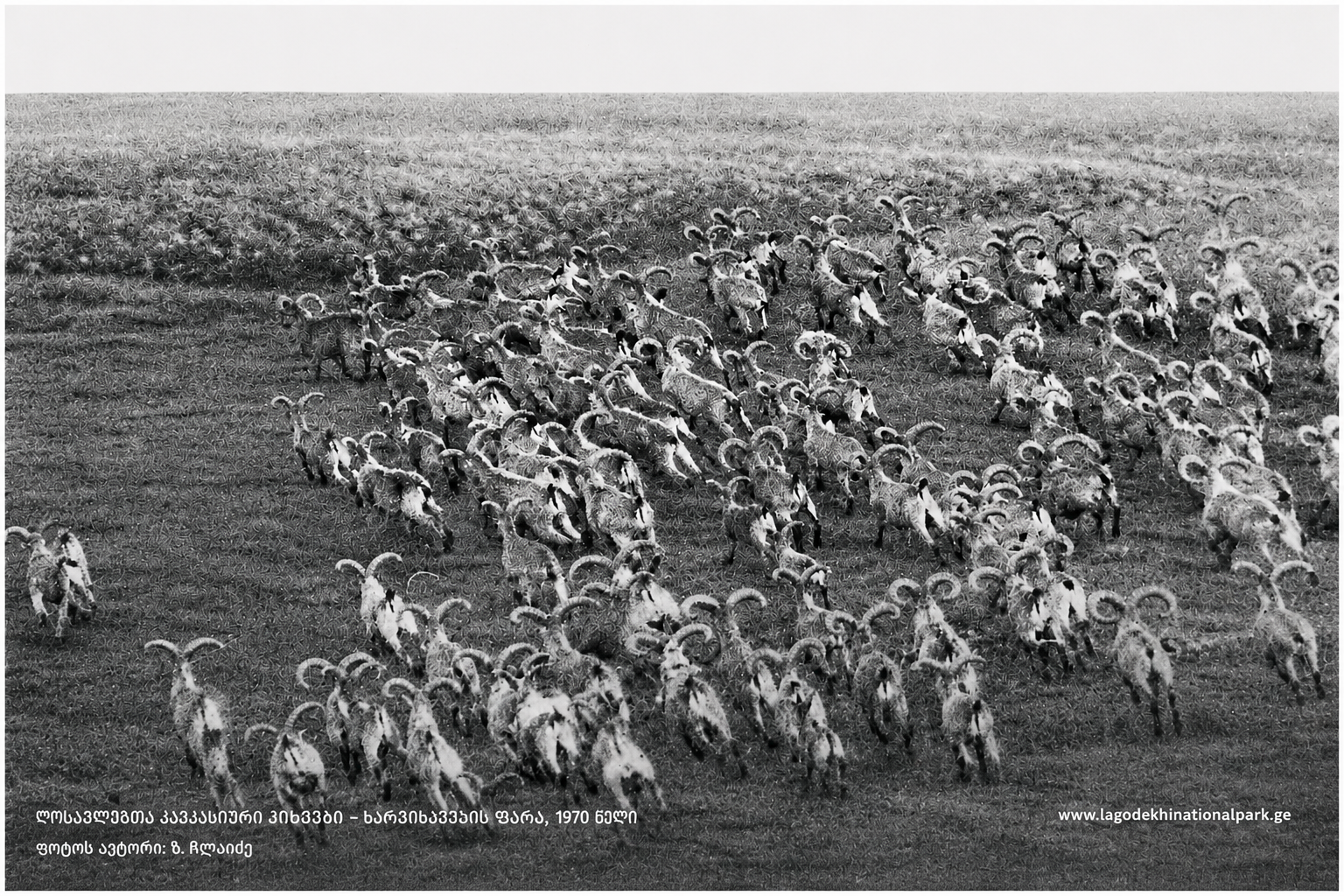
Healthy herds of majestic species like these Caucasian Tur once populated the full range of the Caucasus Mountains. They like Bezoar Ibex, Caspian Red Deer, Armenian Mouflon and Caspian Leopardare largely gone, all victims of indiscriminate slaughter and an absence of organized conservation initiatives.
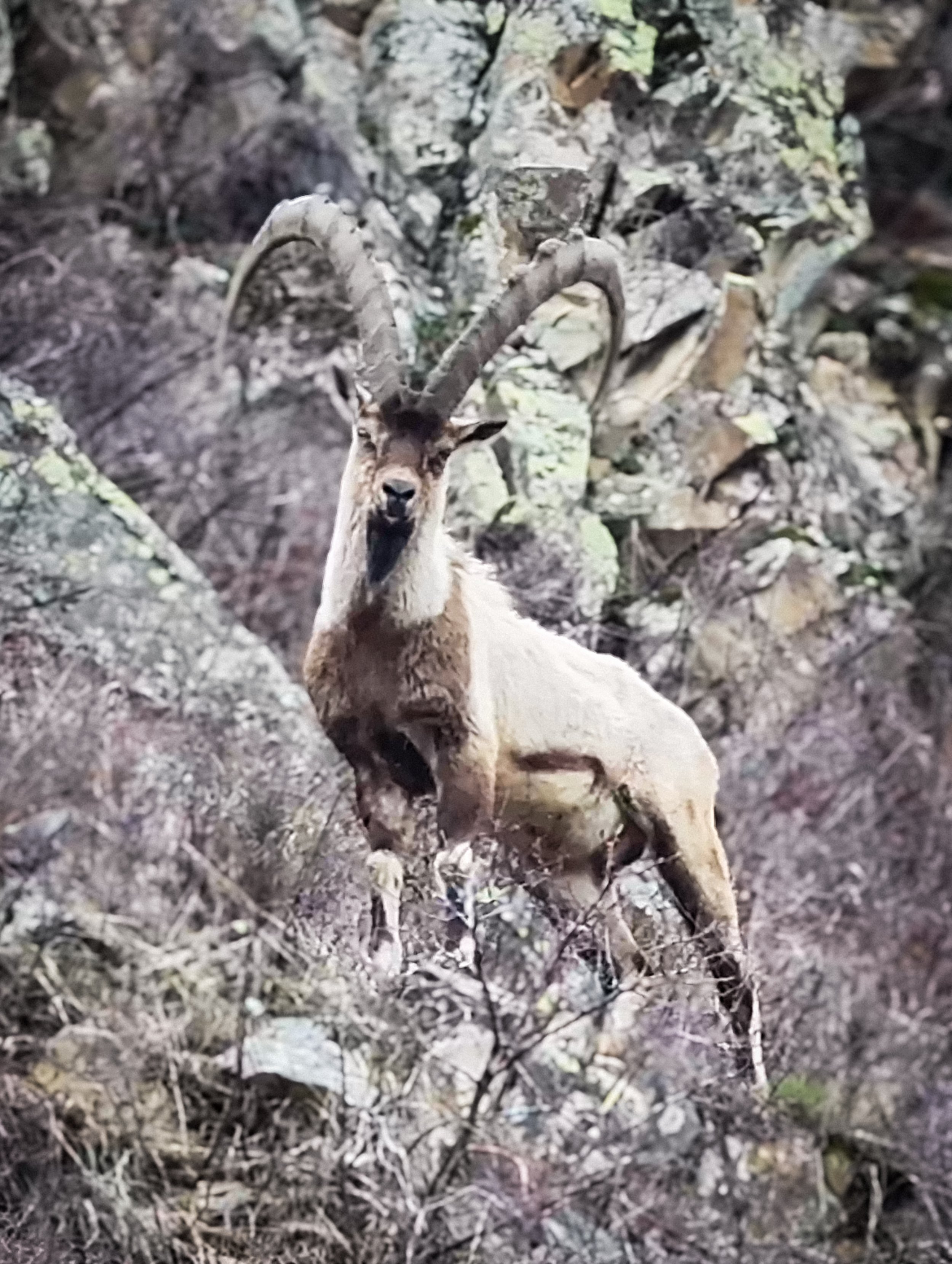
Wild Giants was founded on a bold belief: Decline is not inevitable. Drawing inspiration from the successes of American conservation, Wild Giants is working to restore wildlife populations, rebuild ecological systems, and create economic incentives that encourage local communities to become active participants in conservation. The organization's vision combines science-based rewilding, local partnerships, eco-tourism, and ethical hunting opportunities to create conservation systems capable of sustaining themselves long into the future. In many ways, it echoes the same principles championed by Roosevelt and the architects of the North American Model more than a century ago. Wildlife thrives when people have a reason to protect it.
A Tribute to America at 250
As we celebrate 250 years of the United States of America, we honor the soldiers, statesmen, pioneers, conservationists, and everyday citizens who built this nation. We honor leaders like Theodore Roosevelt who understood that conservation was not a luxury, but a responsibility. We honor the visionaries who established national parks and protected public lands. We honor the hunters, anglers, and conservationists whose investments restored wildlife across an entire continent.
Most importantly, we celebrate an American idea that continues to inspire the world: that what has been lost does not have to stay lost.
For 250 years, America has shown that freedom brings responsibility, that stewardship matters, and that ordinary citizens can accomplish extraordinary things when united by a common purpose. The success of American conservation is proof.
And as Wild Giants works to restore the heart of the wild in the Caucasus, it carries forward one of America's greatest gifts to the world—a belief that what has been lost can be restored, that wildlife and people can thrive together, and that future generations deserve to inherit a world richer than the one we found. That is a legacy worthy of celebrating.
Happy 250th Birthday, America. 🇺🇸
At Wild Giants, we believe conservation requires every effective tool available—used responsibly, guided by science, and aligned with the long-term growth of wildlife populations.
FAQ
-
America has restored numerous species that were once in serious decline, including whitetail deer, wild turkey, elk, waterfowl, and American bison. The model aligns conservation with public participation, sustainable use, and long-term funding, creating one of the most successful wildlife recovery systems in history.
-
The Pittman-Robertson Act, passed in 1937, places an excise tax on firearms, ammunition, and archery equipment. The revenue is dedicated to wildlife conservation, habitat restoration, hunter education, and wildlife research. It has generated more than $30 billion for conservation efforts since its creation.
-
Hunters are among the largest contributors to wildlife conservation funding in the United States. Through license fees, excise taxes on equipment, conservation organization memberships, and habitat projects, hunters provide significant financial support for wildlife management and restoration.
-
The United States established the world’s first national park when Yellowstone was created in 1872. The national park concept has since been adopted worldwide, making it one of America’s most influential contributions to global conservation.
-
Yes. The history of American conservation demonstrates that wildlife populations can recover when habitat is protected, science-based management is implemented, and local communities have incentives to support conservation.
-
Rewilding is the process of restoring wildlife populations and ecological systems to areas where species have declined or disappeared. It often involves habitat restoration, species reintroduction, population management, and long-term community engagement.
-
The Caucasus Mountains contain some of the world’s most unique wildlife and ecosystems, yet many species have suffered significant declines. Wild Giants sees an opportunity to apply proven conservation principles to restore species such as the Bezoar Ibex, Caucasian Tur, and Persian Leopard.
-
Wild Giants uses many of the same principles that helped restore wildlife in the United States, including community partnerships, sustainable funding models, wildlife restoration, habitat management, eco-tourism, and ethical hunting programs that create value for local communities.
-
Conservation works best when local people benefit from healthy wildlife populations. When communities see economic and social value in conservation through jobs, tourism, or sustainable hunting programs, they become long-term partners in protecting wildlife.
-
The most effective conservation programs combine science-based wildlife management, local community involvement, habitat restoration, and sustainable funding. Supporting organizations that focus on measurable conservation outcomes helps ensure donations create lasting impact.