
What Is a Bezoar Ibex and Why Is It Endangered?
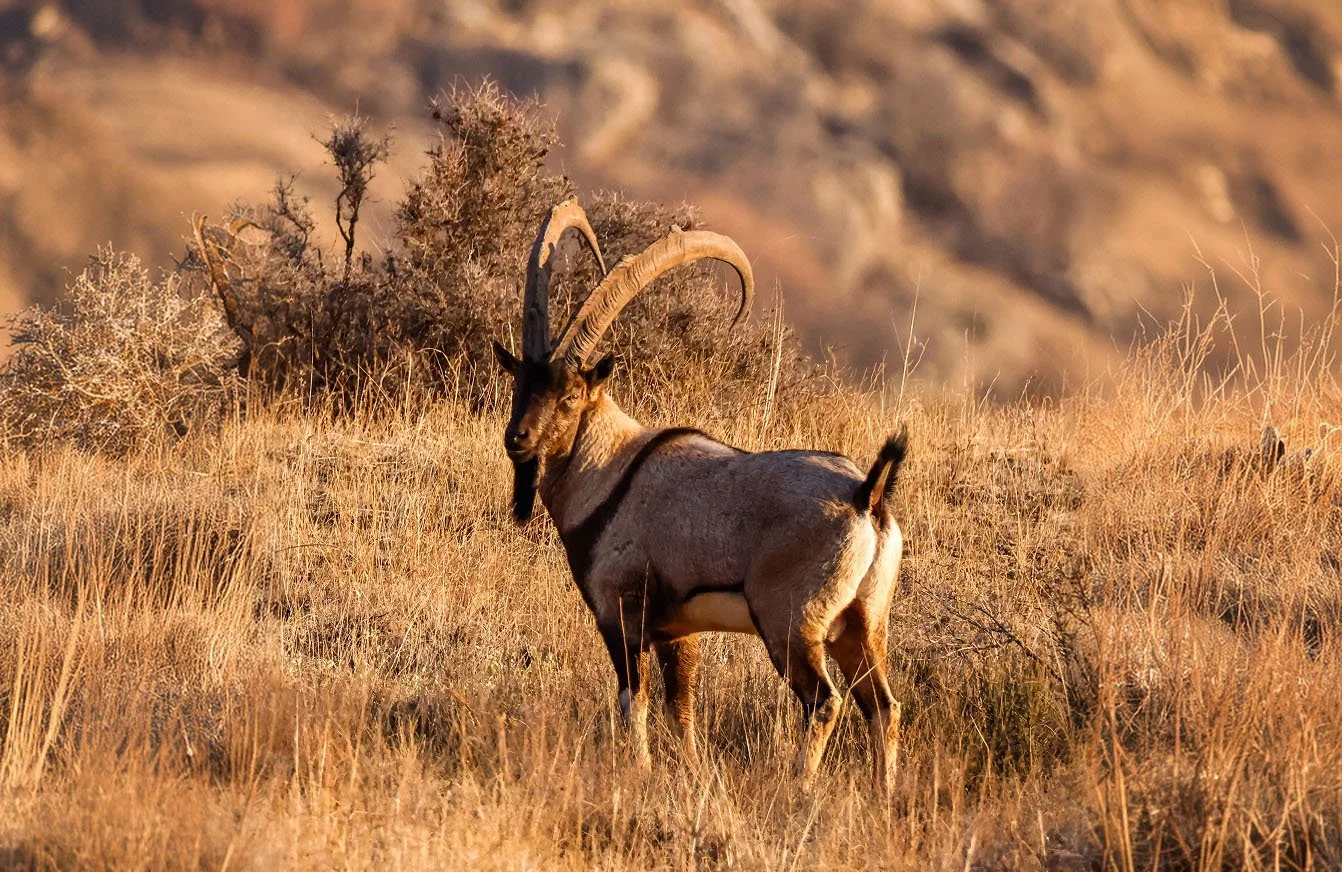
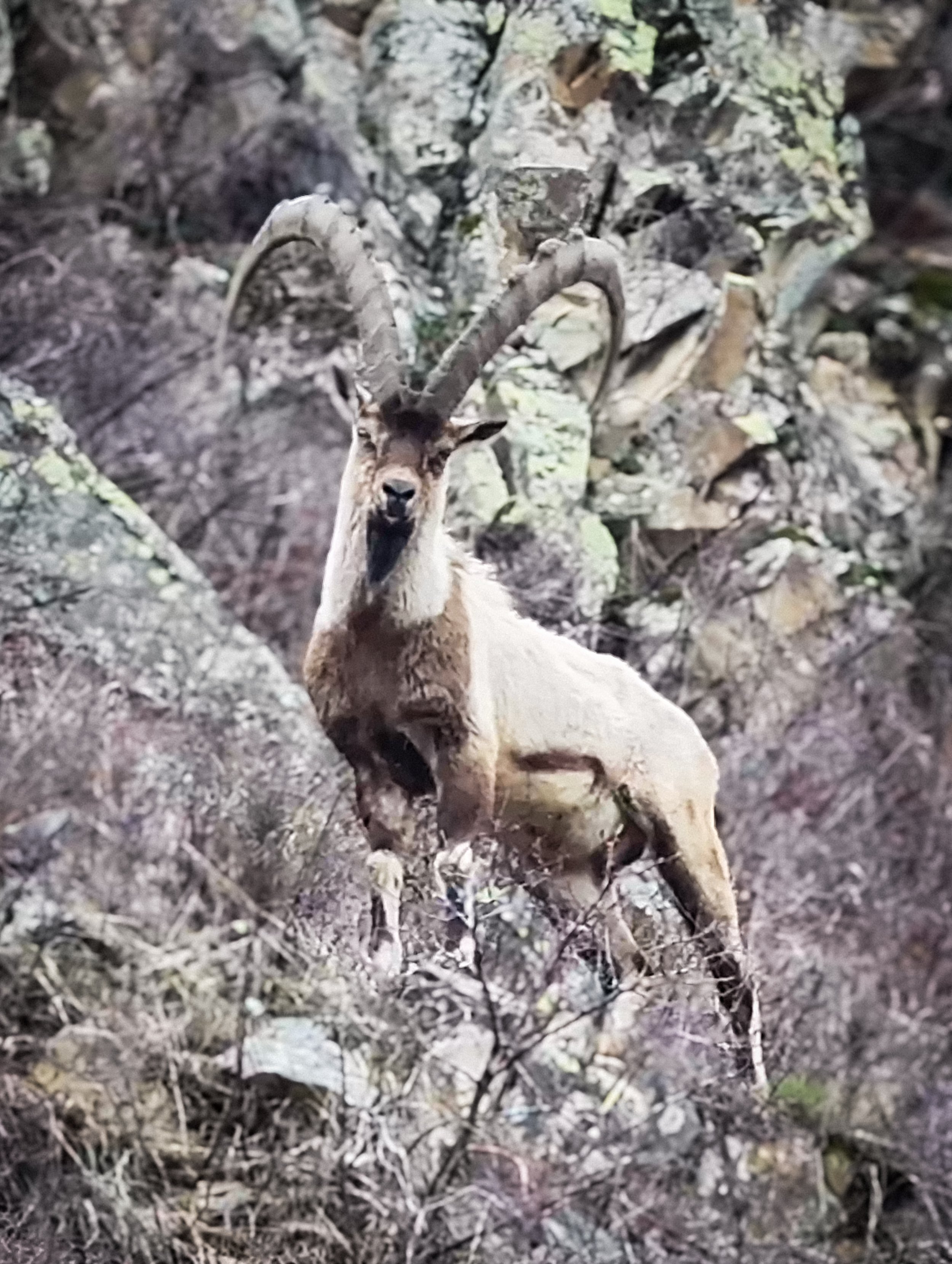
The Bezoar Ibex is a wild mountain goat native to parts of the Caucasus and surrounding regions, recognizable by its powerful build, specialized hooves and the enormous, curved horns of mature males. It is built for life in some of the most rugged terrain in the world, using split hooves and specialized feet to move across steep, rocky slopes.
But the Bezoar Ibex faces a very different challenge from the mountains it was built to conquer. In parts of its historic range, populations have declined and become isolated because of poaching, habitat fragmentation, competition with livestock and human disturbance.
For Wild Giants, the Bezoar Ibex represents more than a remarkable species. It is the first animal at the center of the organization's hands-on wildlife restoration effort in the Republic of Georgia and bringing it back could help restore an important piece of the Caucasus ecosystem.
What Is a Bezoar Ibex?
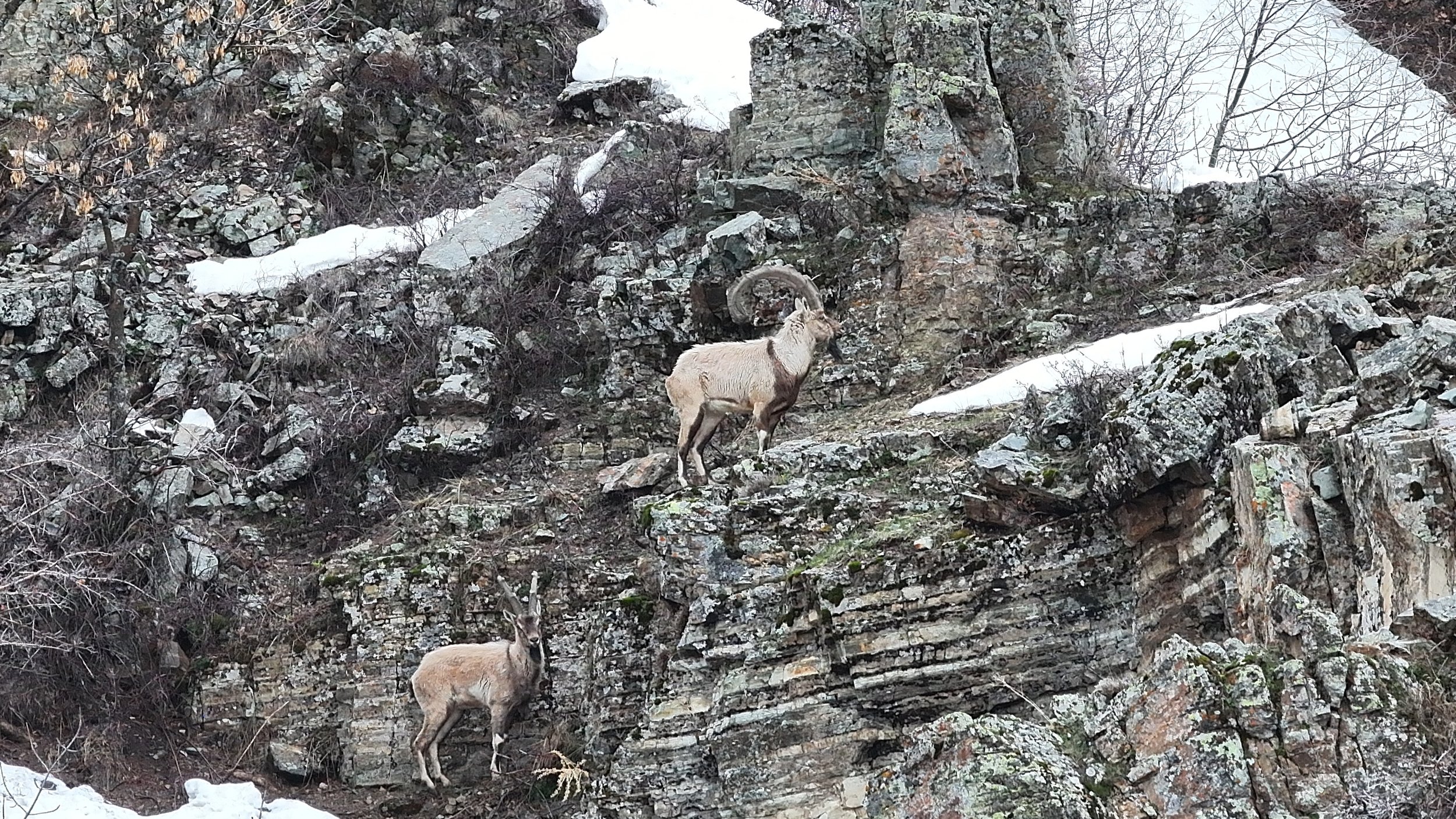
The Bezoar Ibex (Capra aegagrus) is a wild relative of the domestic goat. It is adapted for life in mountainous environments, where steep cliffs, rocky slopes and difficult terrain provide both food and refuge.
One of its most recognizable characteristics is the male's large, backward-curving horns. The horns continue growing throughout an animal's life, developing the distinctive ridges and curves seen in mature males.
But the ibex's horns aren't its only remarkable adaptation.
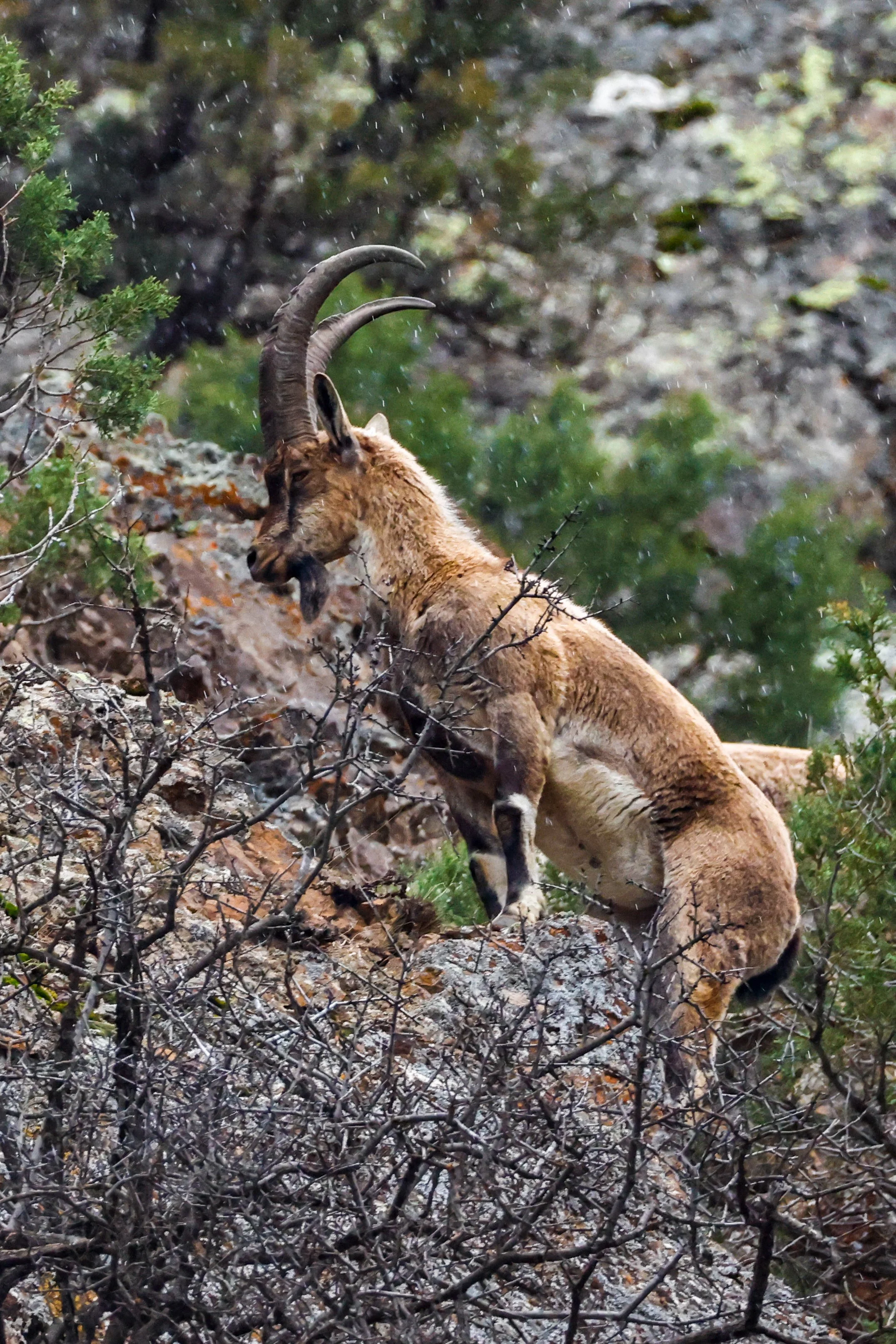
The Bezoar Ibex's specialized hooves allow it to move across steep, uneven rock that would be nearly impossible for many other animals to navigate. Its split hooves and specialized foot structure provide the grip needed to negotiate the rugged terrain of the Caucasus Mountains.
Bezoar Ibex are primarily herbivores. They feed on grasses, herbs, shrubs and other vegetation, with their diet changing as the seasons and mountain conditions change.
Where Does the Bezoar Ibex Live?
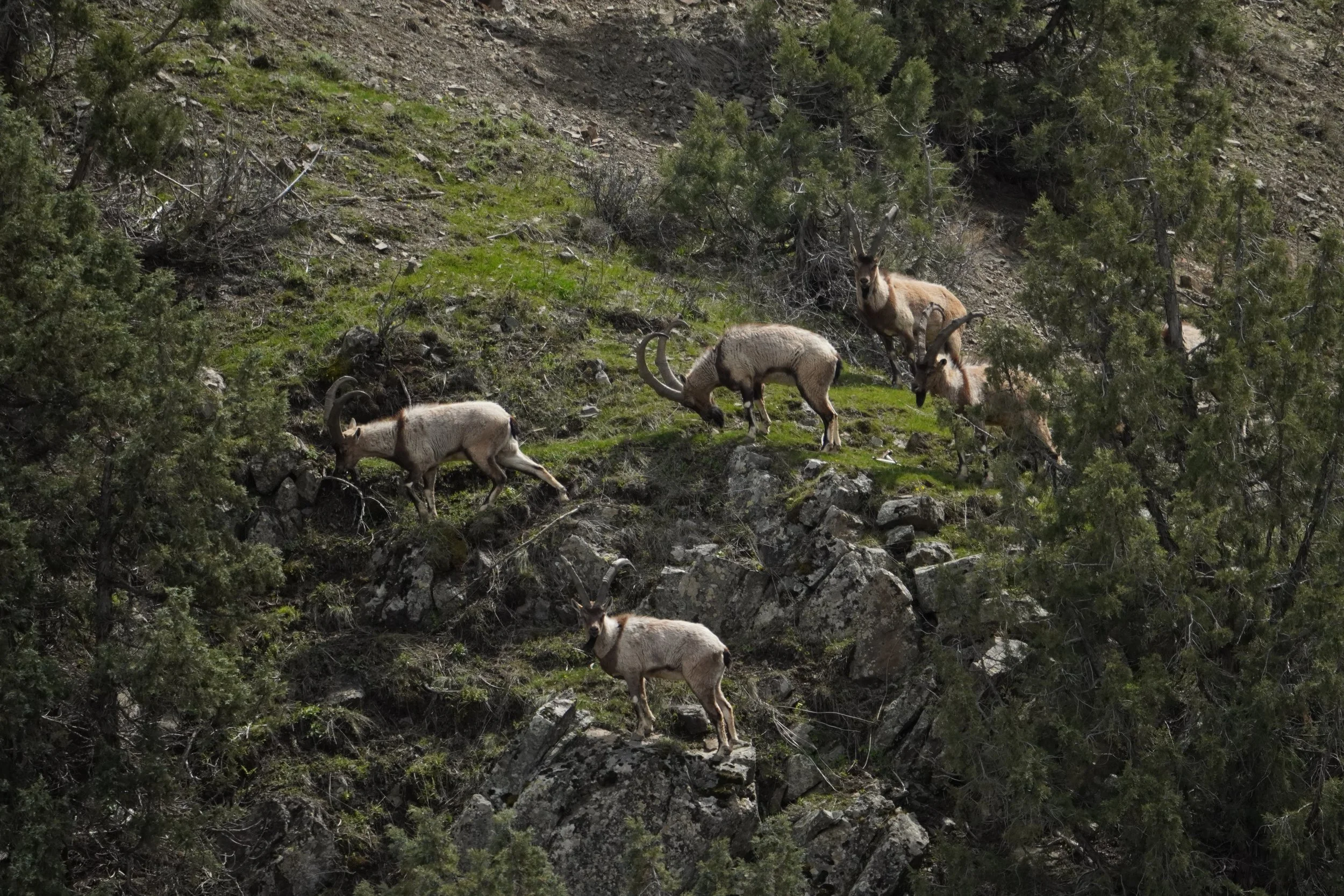
The Bezoar Ibex is associated with rugged mountain environments, including the Caucasus.
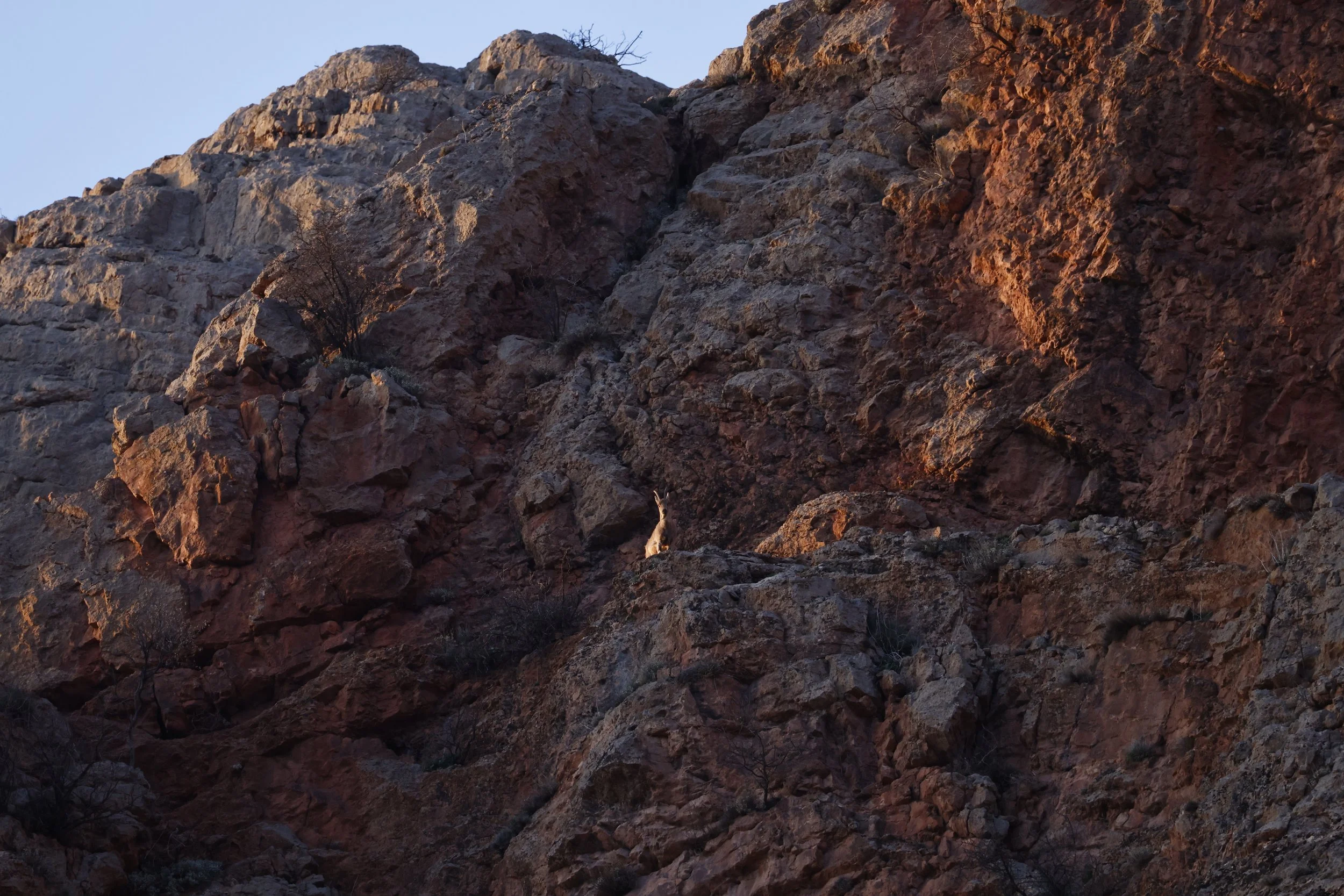
For an animal adapted to cliffs and rocky slopes, this landscape provides an important advantage. Ibex can access food in difficult terrain while using steep slopes and rocky areas as protection from predators and other threats.
That relationship between the animal and its habitat is important to conservation.
Protecting a species isn't simply about protecting individual animals. It also means protecting the landscapes where those animals can survive, reproduce and eventually rebuild self-sustaining populations.
That is one reason the Bezoar Ibex is an important starting point for Wild Giants' restoration work in Georgia.
What Happens During the Bezoar Ibex Rut?
The breeding season, known as the rut, is one of the most dramatic periods in the Bezoar Ibex's annual cycle.
The rut typically occurs in late fall and winter. During this period, mature males compete for access to females, displaying their size and horns, posturing against rivals and sometimes engaging in powerful clashes in which they drive their horns against one another.
These battles may look violent, but they serve a biological purpose: determining which males successfully reproduce.
And the outcome isn't determined by horn size alone.
Age, experience, physical condition and social dominance can all play a role in competition between males.
How Do Bezoar Ibex Have Their Young?
After a gestation period of roughly five months, female ibex separate from the larger group to give birth in secluded, rocky terrain.
A female generally produces one kid, although twins can occur. Newborns have to become mobile quickly. In a mountain environment, the ability to follow their mother and escape predators can make the difference between survival and death.
The first weeks are especially dangerous.
Golden eagles and other predators can take young ibex, while wolves and other large carnivores may prey on older young and adults. For populations already reduced to small, isolated groups, every successful birth matters.
Why Is the Bezoar Ibex Endangered?
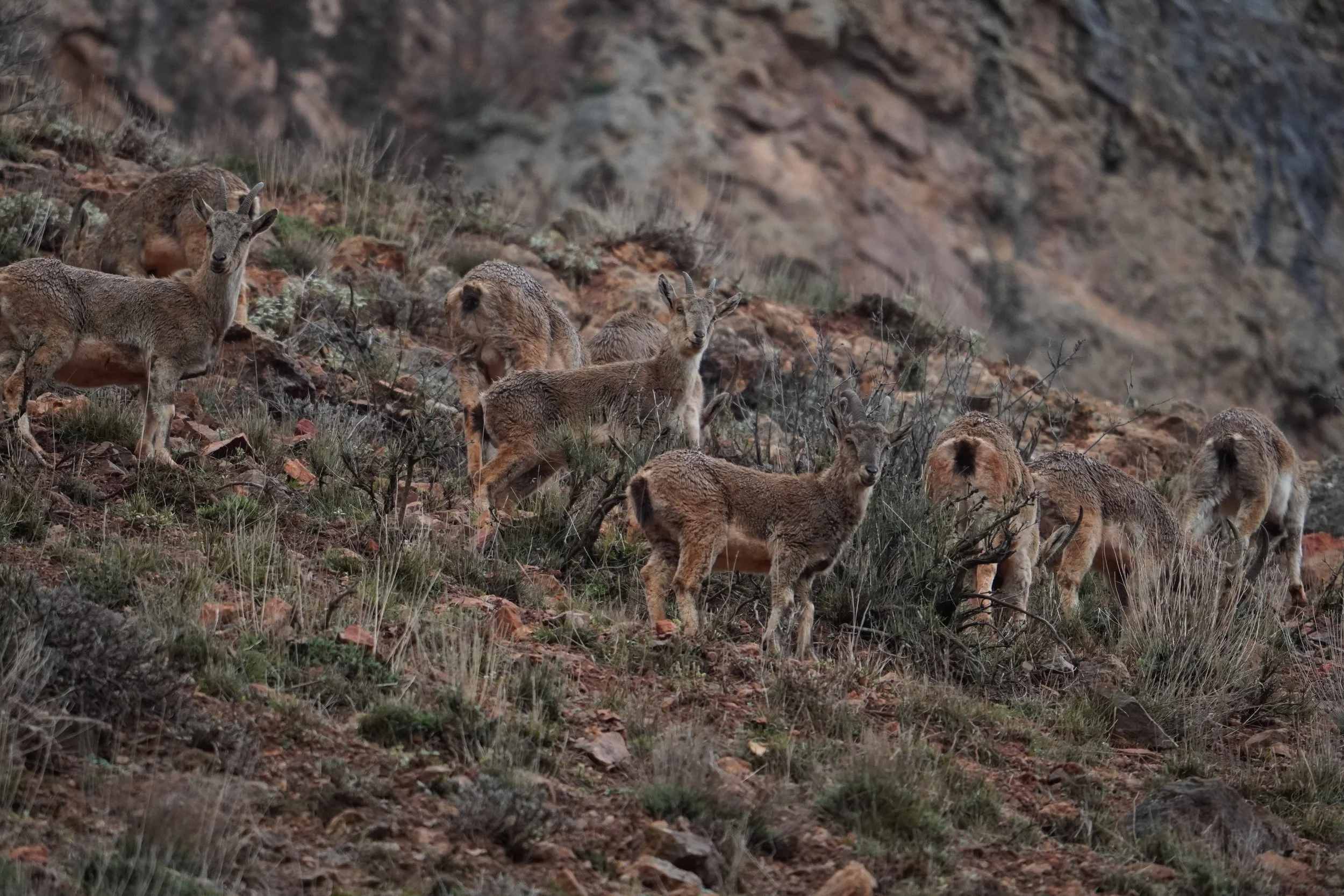
The Bezoar Ibex has experienced significant population declines across portions of its historic range.
Several pressures contribute to those declines:
Poaching can remove mature breeding animals.
Habitat fragmentation can isolate populations and reduce access to suitable habitat.
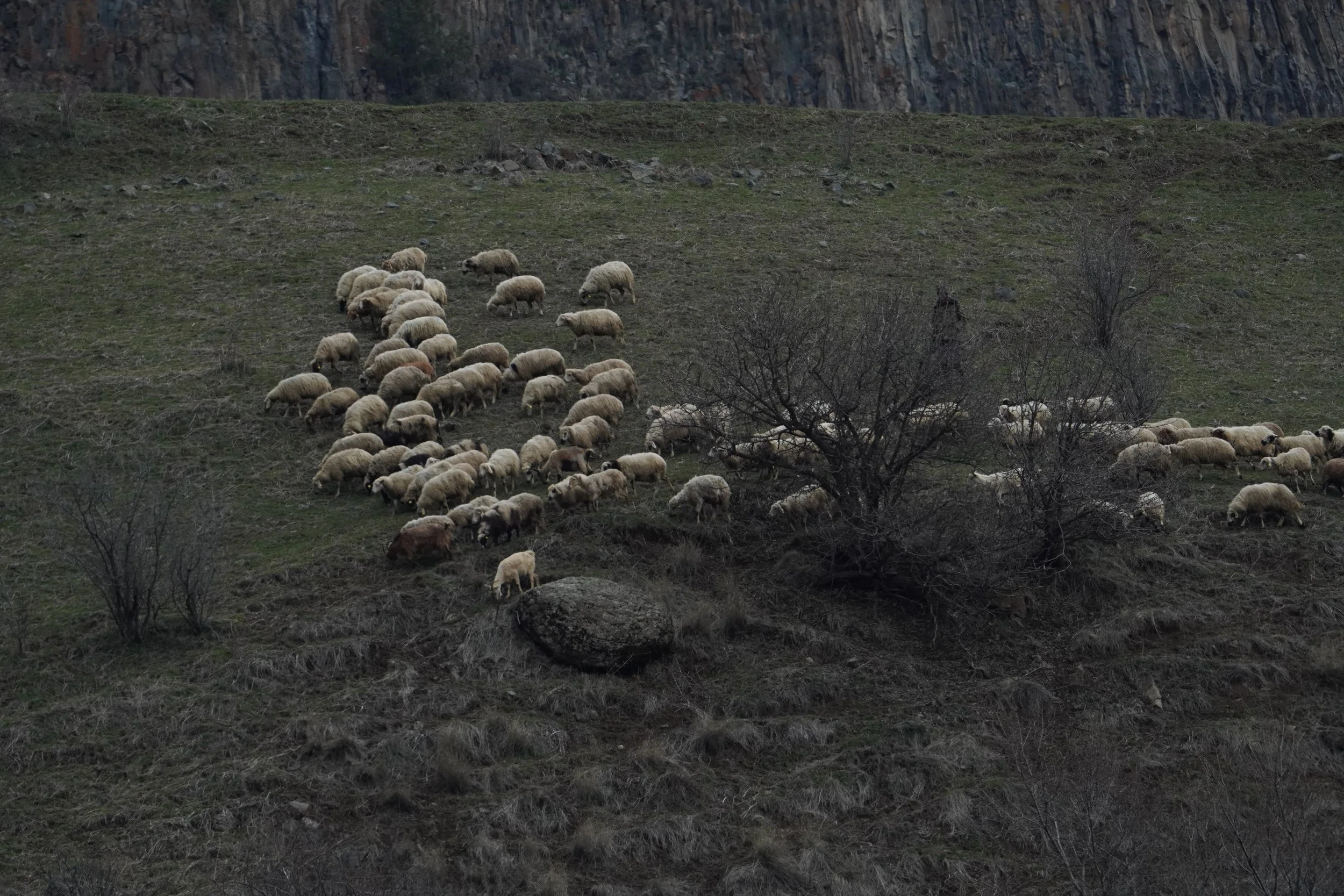
Competition with livestock can affect available resources.
Human disturbance can restrict where ibex can safely live and reproduce.
Small, isolated populations can face declining genetic diversity.
That last challenge is particularly important.
When a population becomes very small and isolated, genetic diversity can decline. A population may continue to exist while becoming less resilient over the long term.
In other words, having animals left in the wild does not necessarily mean a population is secure.
For conservationists, rebuilding a healthy, genetically strong population can therefore be as important as simply increasing the number of animals.
How Can Conservation Help the Bezoar Ibex?
Active restoration can provide another tool when wild populations have become too small or fragmented to recover on their own.
Wild Giants has acquired a 305-acre property in the Republic of Georgia that will serve as the foundation for its wildlife breeding and restoration program.
Construction of a dedicated breeding facility is planned to begin later this year, with the initial focus on Bezoar Ibex.
The goal is to establish healthy, genetically strong animals that can eventually support reintroduction into suitable portions of their historic range.
The Bezoar Ibex is particularly well suited to this approach because it reproduces effectively, is adapted to rugged mountain terrain and plays an important role in the mountain ecosystem.
Why Is Wild Giants Starting With the Bezoar Ibex?
The choice is about more than the animal itself.
The Bezoar Ibex is a species that belongs in the Caucasus. Its survival is connected to the health of the mountain ecosystems where it evolved, and rebuilding its population creates an opportunity to restore a piece of that larger system.
Rewilding the Bezoar Ibex isn't simply about putting more goats on a mountain. It's about rebuilding a healthy population that can eventually become self-sustaining in the wild.
For Wild Giants, that makes the ibex a starting point for something much bigger: restoring wildlife to places where it once belonged.
What Does the Future Look Like for the Bezoar Ibex in Georgia?
The challenge is substantial, but so is the opportunity.
The mountains remain. Suitable habitat remains. What has changed is the abundance and distribution of the wildlife that once made these landscapes whole.
Wild Giants' work begins with establishing a strong foundation for the Bezoar Ibex through its breeding and restoration program. From there, the long-term goal is to support reintroduction into appropriate areas of the species' historic range.
The mountains are still there. The habitat is still there. Now the challenge is to bring the wildlife back.
FAQ
-
America has restored numerous species that were once in serious decline, including whitetail deer, wild turkey, elk, waterfowl, and American bison. The model aligns conservation with public participation, sustainable use, and long-term funding, creating one of the most successful wildlife recovery systems in history.
-
The Pittman-Robertson Act, passed in 1937, places an excise tax on firearms, ammunition, and archery equipment. The revenue is dedicated to wildlife conservation, habitat restoration, hunter education, and wildlife research. It has generated more than $30 billion for conservation efforts since its creation.
-
Hunters are among the largest contributors to wildlife conservation funding in the United States. Through license fees, excise taxes on equipment, conservation organization memberships, and habitat projects, hunters provide significant financial support for wildlife management and restoration.
-
The United States established the world’s first national park when Yellowstone was created in 1872. The national park concept has since been adopted worldwide, making it one of America’s most influential contributions to global conservation.
-
Yes. The history of American conservation demonstrates that wildlife populations can recover when habitat is protected, science-based management is implemented, and local communities have incentives to support conservation.
-
Rewilding is the process of restoring wildlife populations and ecological systems to areas where species have declined or disappeared. It often involves habitat restoration, species reintroduction, population management, and long-term community engagement.
-
The Caucasus Mountains contain some of the world’s most unique wildlife and ecosystems, yet many species have suffered significant declines. Wild Giants sees an opportunity to apply proven conservation principles to restore species such as the Bezoar Ibex, Caucasian Tur, and Persian Leopard.
-
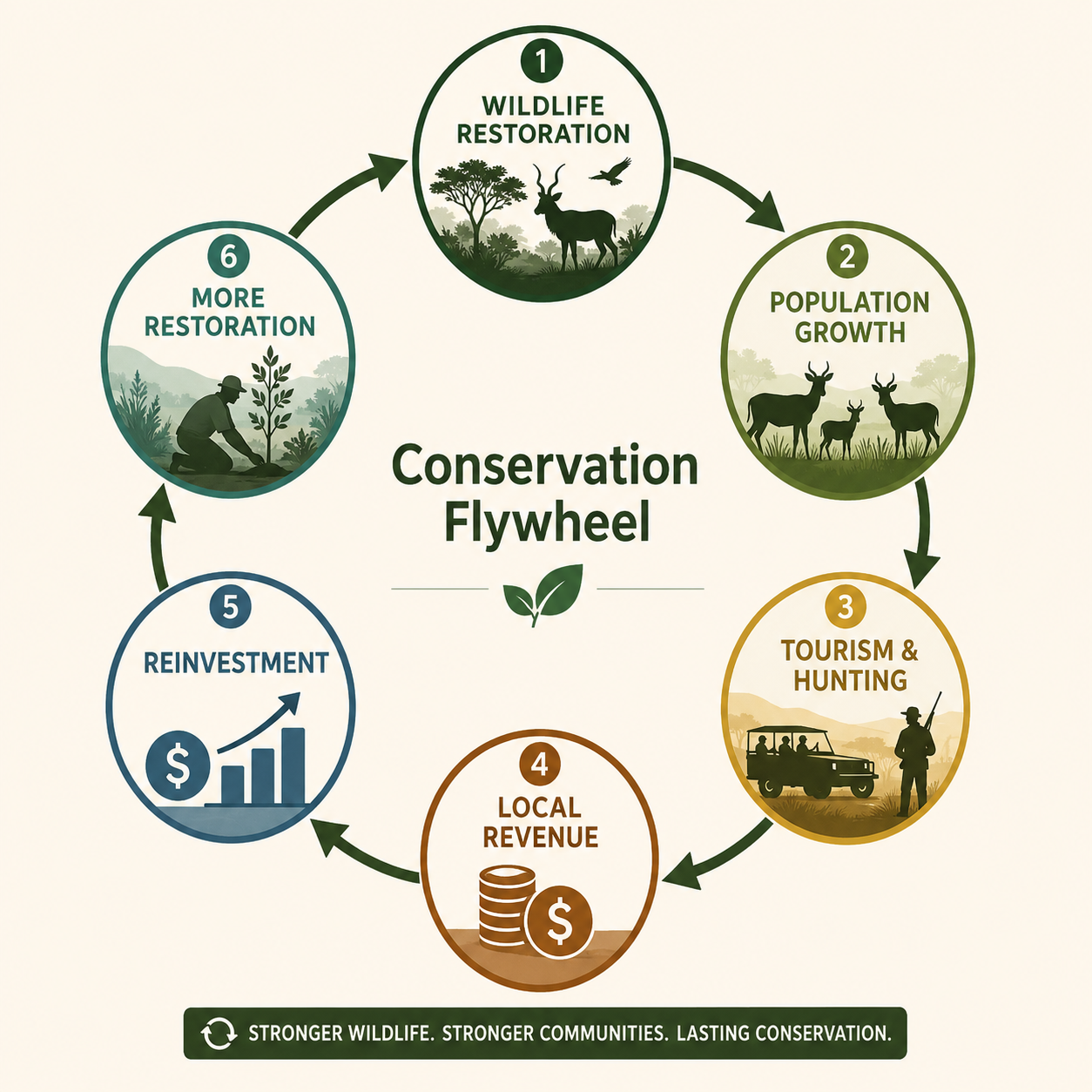
Wild Giants uses many of the same principles that helped restore wildlife in the United States, including community partnerships, sustainable funding models, wildlife restoration, habitat management, eco-tourism, and ethical hunting programs that create value for local communities.
-
Conservation works best when local people benefit from healthy wildlife populations. When communities see economic and social value in conservation through jobs, tourism, or sustainable hunting programs, they become long-term partners in protecting wildlife.
-
The most effective conservation programs combine science-based wildlife management, local community involvement, habitat restoration, and sustainable funding. Supporting organizations that focus on measurable conservation outcomes helps ensure donations create lasting impact.