
Why Conservation Must Pay for Itself
How Results-Driven Conservation Turns Wildlife Restoration into a Self-Funded Engine for Growth
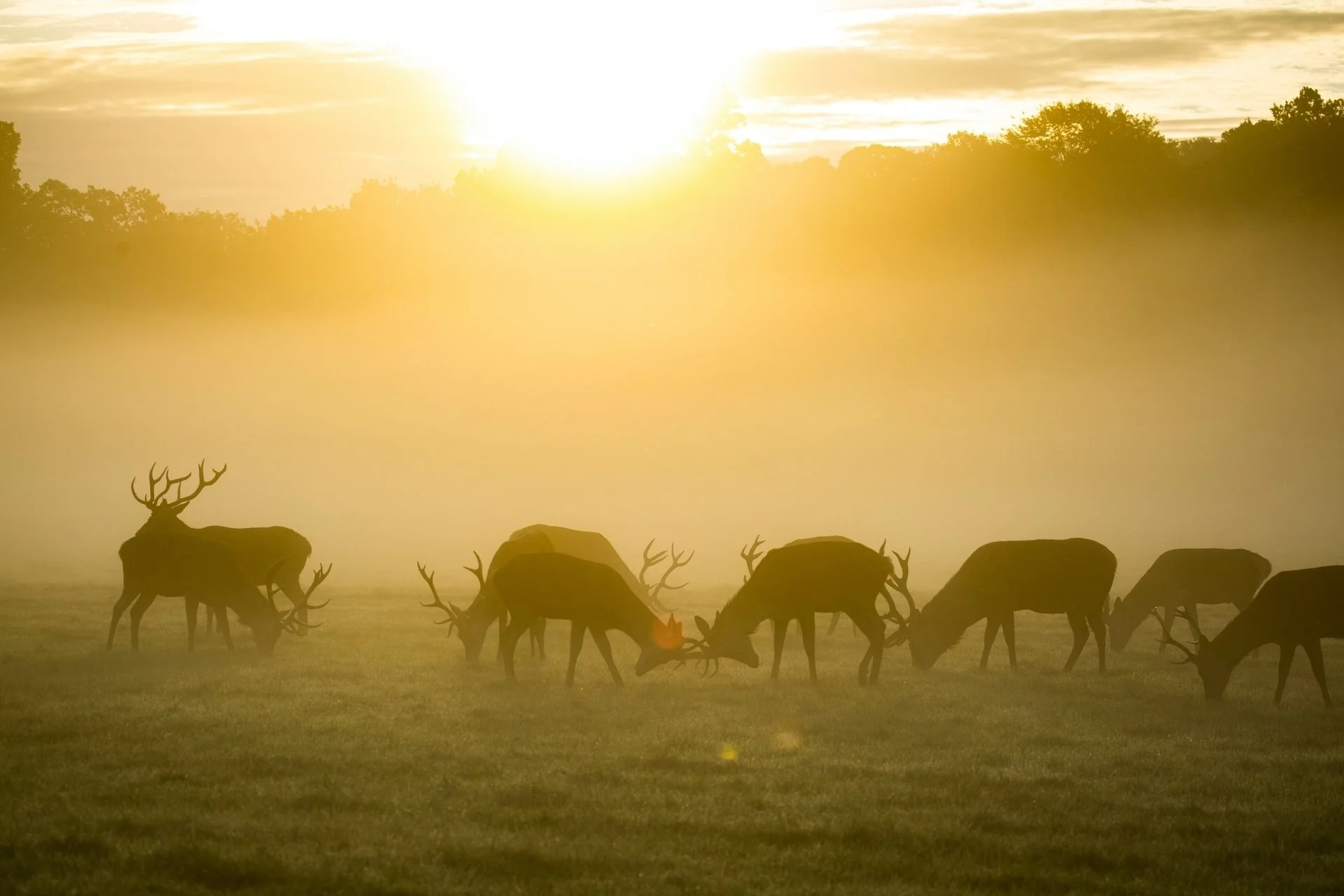
Restoration of extirpated or highly endangered wildlife requires a hands-on system that’s built on breeding, rewilding and sustainability.
The Problem with Traditional Wildlife Conservation Models
· Dependent on continuous funding
· Limited scalability
· High administrative overhead
· Impact tied to donor cycles
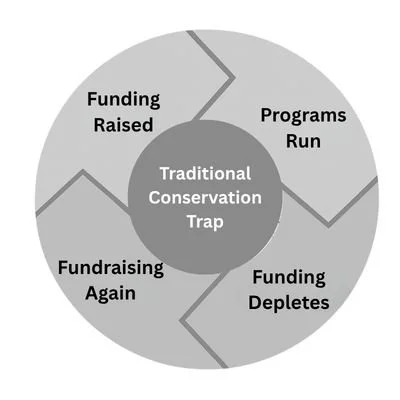
For decades, wildlife conservation projects have followed a familiar cycle: protect habitat, secure funding, and repeat. This model has supported critical conservation programs for endangered species, preserving landscapes and preventing further biodiversity loss. But it has also created a structural limitation—conservation success remains tied to continuous external funding. For serious donors and investors asking “Where do conservation donations go?”, the answer often includes ongoing operational needs like fundraising, reporting, and grant acquisition. These are necessary functions, yet they can divert time and resources away from the core mission: restoring wildlife at scale. At Wild Giants, we believe the future lies in sustainable wildlife conservation models that move beyond dependency and toward durability—where conservation is not just funded, but fundamentally self-sustaining. This approach represents a new category of sustainable wildlife conservation models—designed to reduce dependency on donations while increasing measurable impact.
What if wildlife created its own value?
Can Conservation Become Self-Funding?
This shift begins with a simple but transformative question: what if conservation could generate its own momentum? In many parts of the world, wildlife already holds economic value, driving tourism, supporting jobs, and shaping regional economies. However, where wildlife populations have declined, that value disappears—weakening both ecological systems and local incentives to protect them. Rewilding-driven conservation seeks to reverse this cycle by rebuilding not only animal populations, but the economic ecosystems around them. Through carefully designed wildlife conservation projects, restored populations can support eco-tourism, community-based enterprise, and critically, hunting conservation programs that are tightly regulated and scientifically managed. These programs are not ideological—they are practical, grounded tools that generate meaningful revenue while reinforcing conservation outcomes.
How Sustainable Wildlife Conservation Models Actually Work
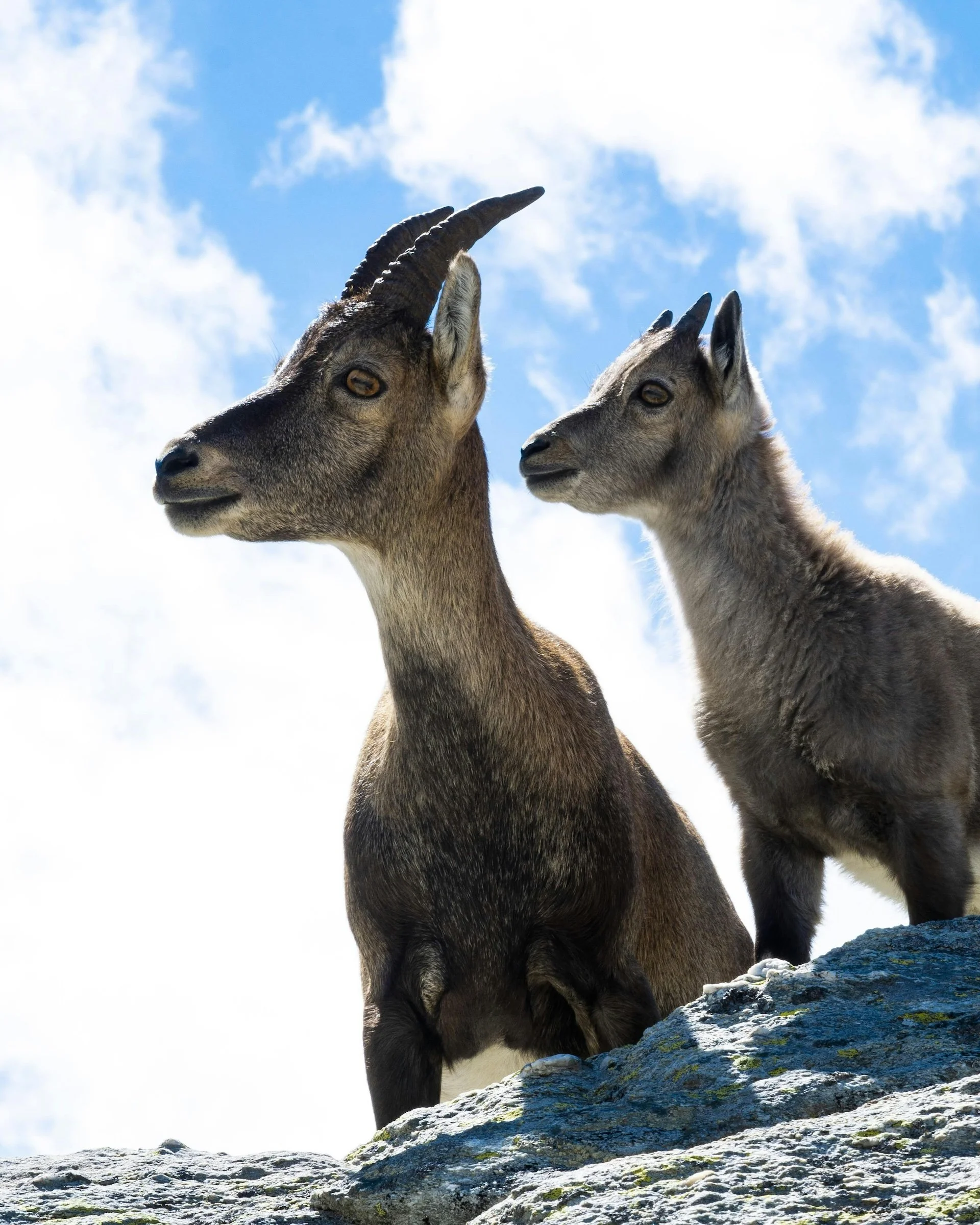
Breeding endangered animals in captivity is a critical step in rewilding conservation.
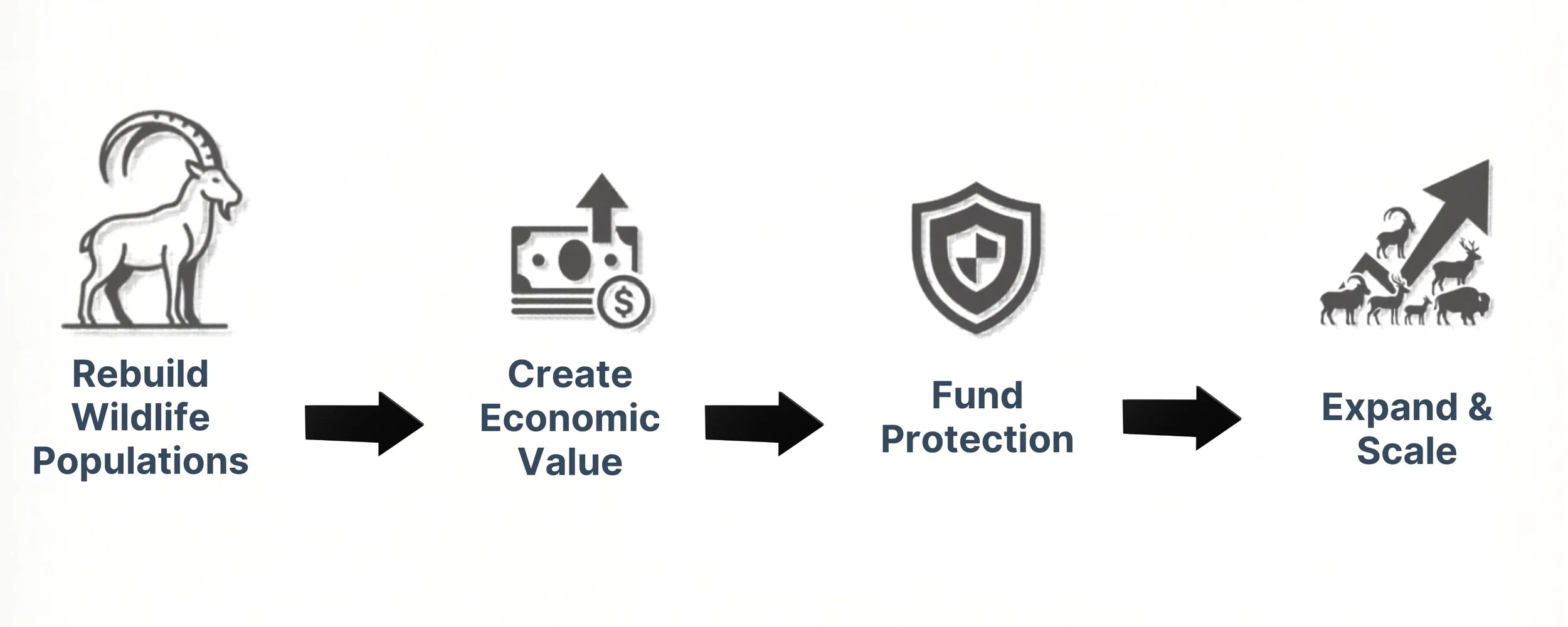
Rebuild Wildlife Populations. Results-driven conservation where wildlife restoration generates its own momentum and ultimately becomes 100 percent self-funded starts with rebuilding populations by breeding and rewilding.
Create Economic Value. As wildlife populations recover, they begin to create value that can be reinvested directly into habitat protection, anti-poaching efforts, and long-term management. Sustainable hunting conservation, in particular, plays a strategic role within this model. When applied responsibly, it occurs only after populations are stable, is limited in scope, and generates disproportionate financial returns from minimal impact.
Reinforce The System. That revenue doesn’t leave the ecosystem—it strengthens it, funding the very systems that ensure wildlife continues to thrive. In that context, conservation is no longer a cost center. It becomes an engine of growth.

Revenues generated through sustainable conservation systems help fund habitat protection and anti-poaching efforts.
From Cost Center to Growth Engine: Scaling Conservation Through Revenue
The advantage of this approach is scale. Traditional conservation, while impactful, is inherently constrained by funding cycles and donor continuity. In contrast, sustainable wildlife conservation models unlock expansion by aligning ecological success with economic incentives. When communities benefit directly from thriving wildlife populations, protection becomes a shared priority. When governments see measurable economic return, support becomes more consistent. And when investors recognize a model that reduces dependency while increasing impact, conservation becomes not just a cause—but a viable, scalable strategy.Conservation-driven hunting also strengthens local stewardship. Villages involved in regulated hunting programs are more likely to protect habitats and report poaching, creating safer conditions for species like Bezoar Ibex, Caspian Red Deer, and Caucasian Tur. In this way, hunting becomes a conservation multiplier: one responsibly harvested animal helps fund the protection and restoration of many more. By linking ecological sustainability with economic benefits, Wild Giants ensures wildlife and people can coexist successfully in Georgia’s rural landscapes.

No Rewilding + No Value + No Protection = Decline
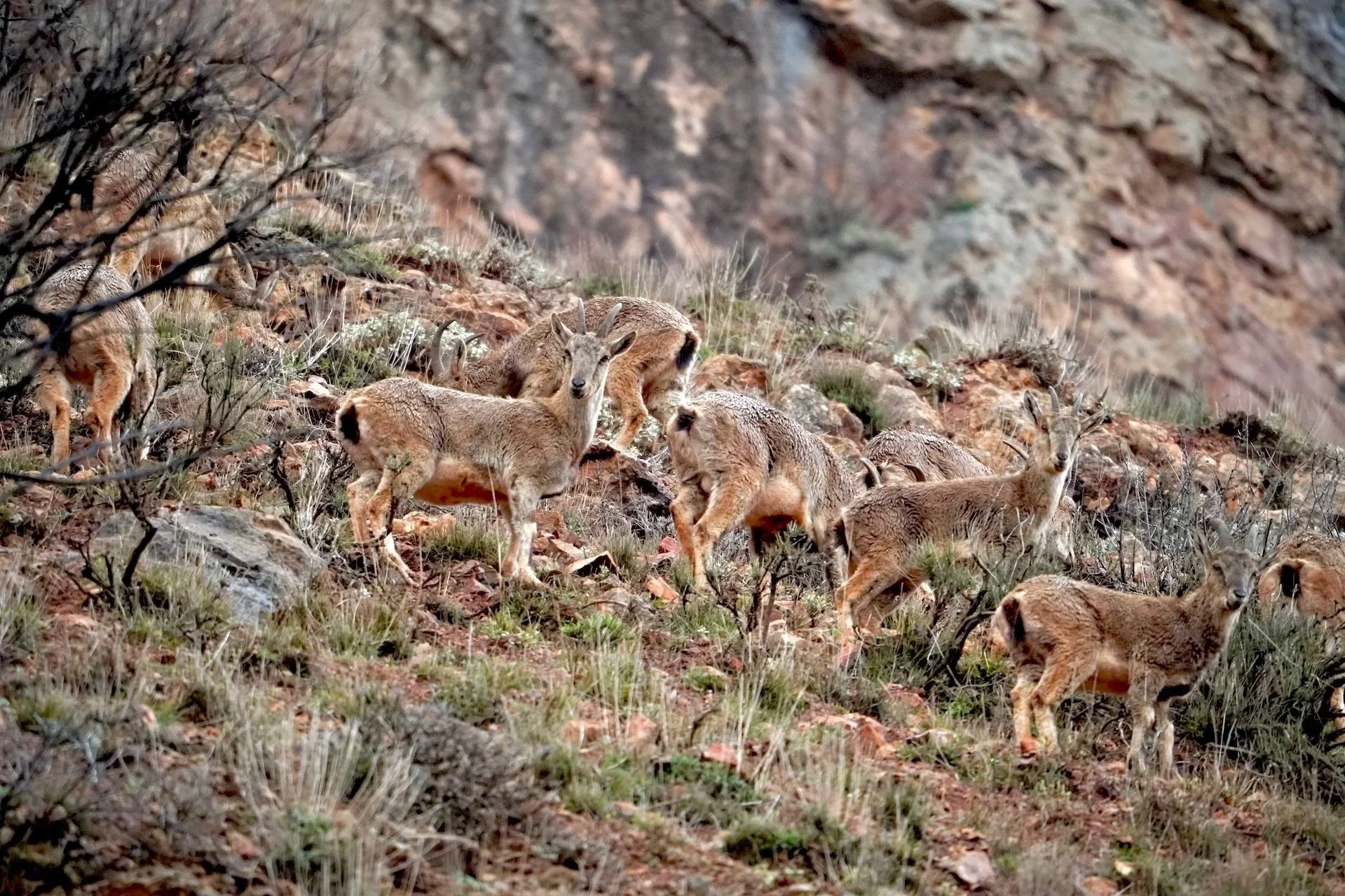
Rewilding + Value + Protection = Growth
Why Rewilding-Driven Conservation Requires an Economic Model
This is not a replacement for traditional conservation—it is an evolution of it. Protected areas, policy frameworks, and species protections remain essential foundations. But in regions where wildlife has already declined beyond natural recovery, a more integrated approach is required—one that restores populations, engages local economies, and sustains itself over time. The most successful conservation systems of the future will not be defined solely by what they protect, but by what they create: restored ecosystems, resilient economies, and enduring incentives to preserve both.
Building Self-Sustaining Wildlife Restoration Programs That Last
At Wild Giants, we believe conservation should do more than protect endangered populations within the limitations of donations. We are building rewilding systems that create measurable population growth, reduces reliance on donations, creates economic value that fuels further restoration and can scale, sustain, and stand on its own for generations to come.
FAQ
-
A sustainable wildlife conservation model is a system where conservation funds itself over time. By restoring wildlife populations and creating economic value around them, these models become self-funding and reduce reliance on continuous donations and ensure long-term impact.
-
Sustainable conservation generates revenue through eco-tourism, conservation-based enterprises, and tightly regulated, science-based hunting programs. These revenue streams are reinvested directly into wildlife restoration, protection, and local communities—creating a self-sustaining system that funds its own growth.
-
Wild Giants focuses on building self-sustaining wildlife restoration systems that generate long-term impact. We combine wildlife breeding with active rewilding and then develop economic models that create ongoing value. We invest that value directly into funding and sustaining programs designed to grow, scale, and endure—benefiting both wildlife and the communities that support them.
-
Sustainable conservation creates direct economic opportunities for local communities through jobs, tourism, and conservation-based enterprises. As wildlife populations recover, they become valuable assets—providing ongoing income and creating strong incentives for long-term stewardship and protection.