ARMENIAN MOUFLON
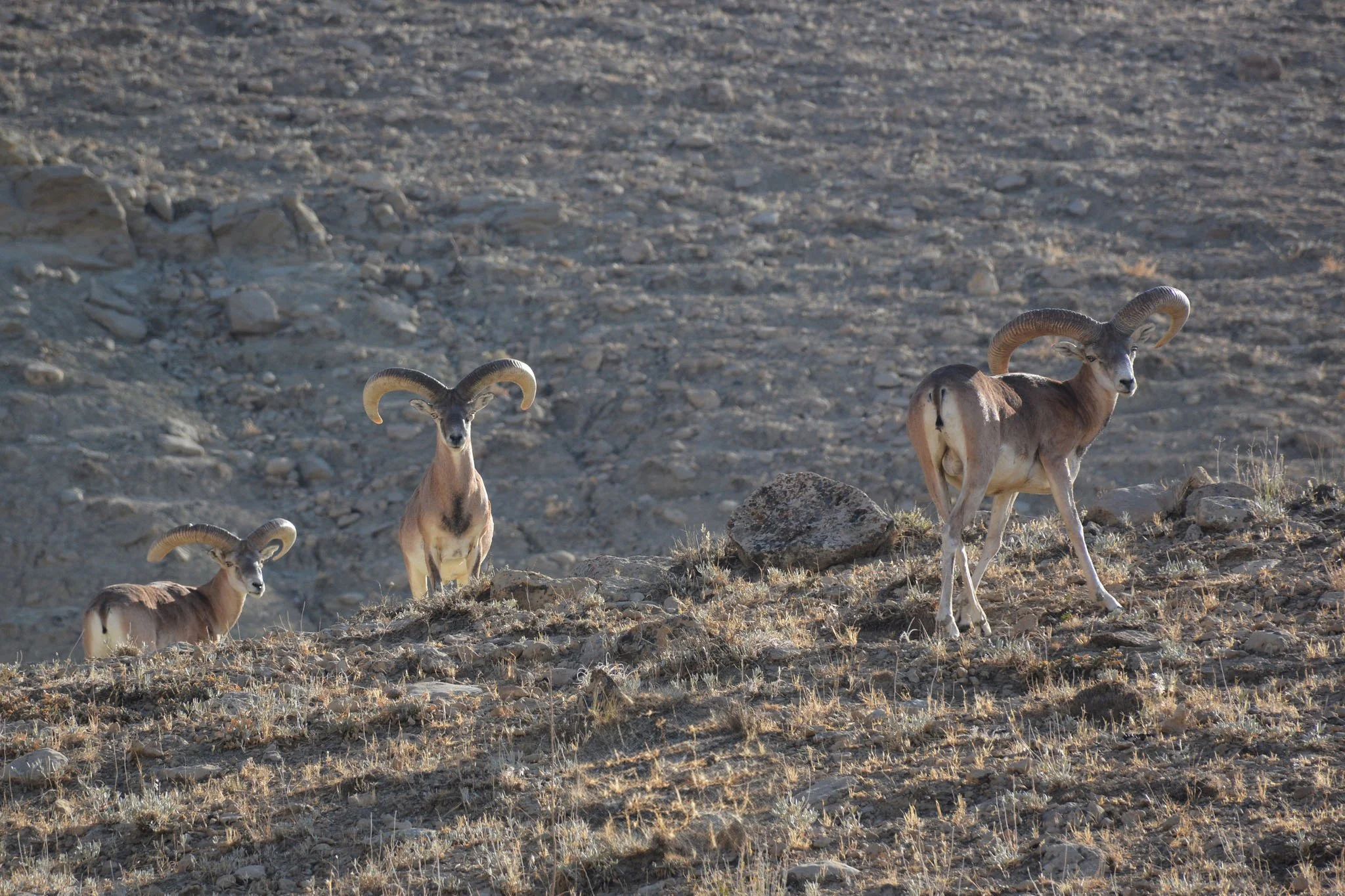
Or (Ovis gmelini gmelini) is a wild sheep of rocky hills, steppes, and semi-deserts in Armenia, Nakhchivan, and northwest Iran. Extirpated in Georgia, it faces poaching, livestock competition, and habitat loss, making conservation critical.
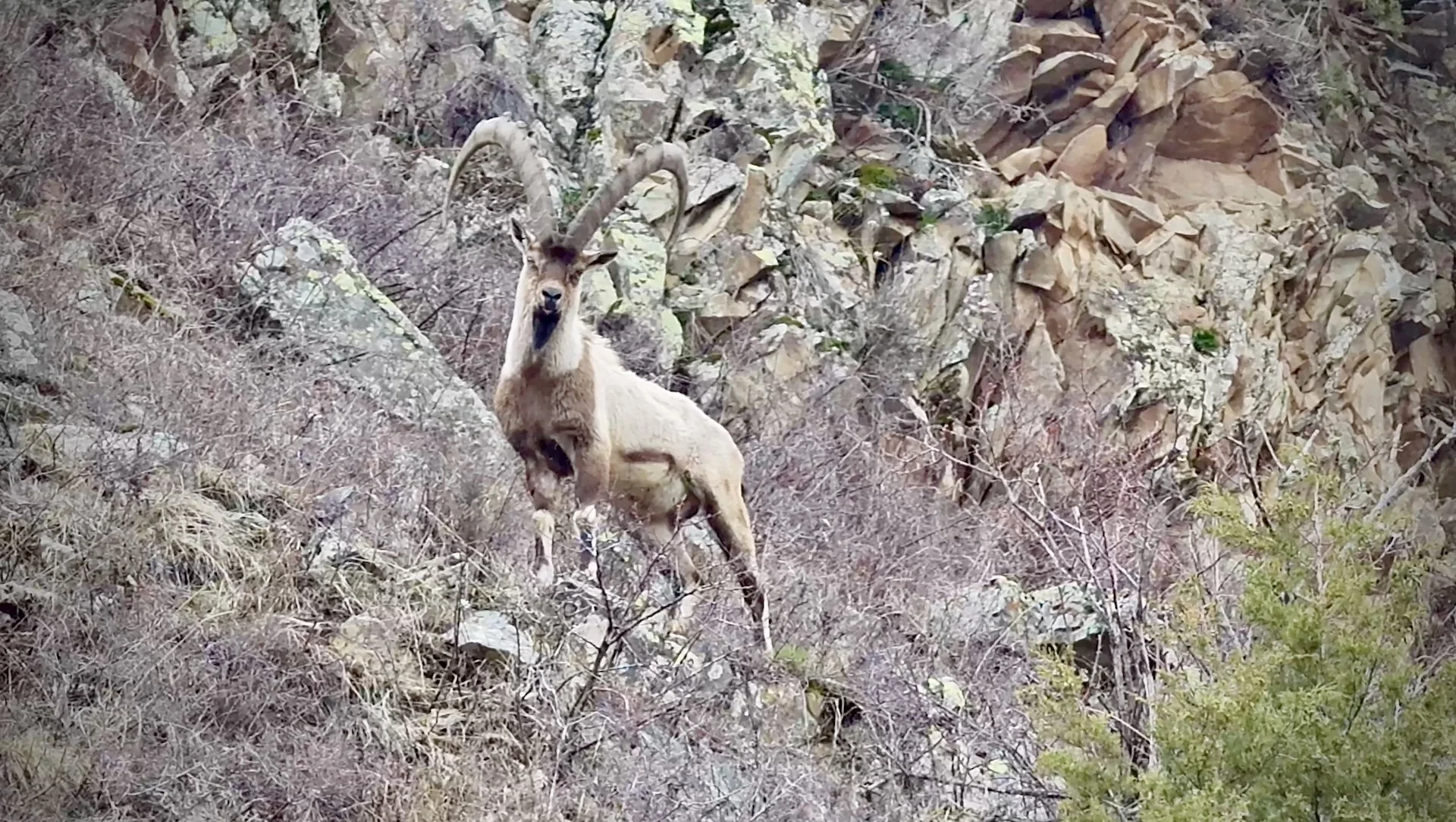
Armenian mouflon (Ovis gmelini), Iran population. Photo: [Mohammad Amin Ghaffari] / iNaturalist (CC BY 4.0)
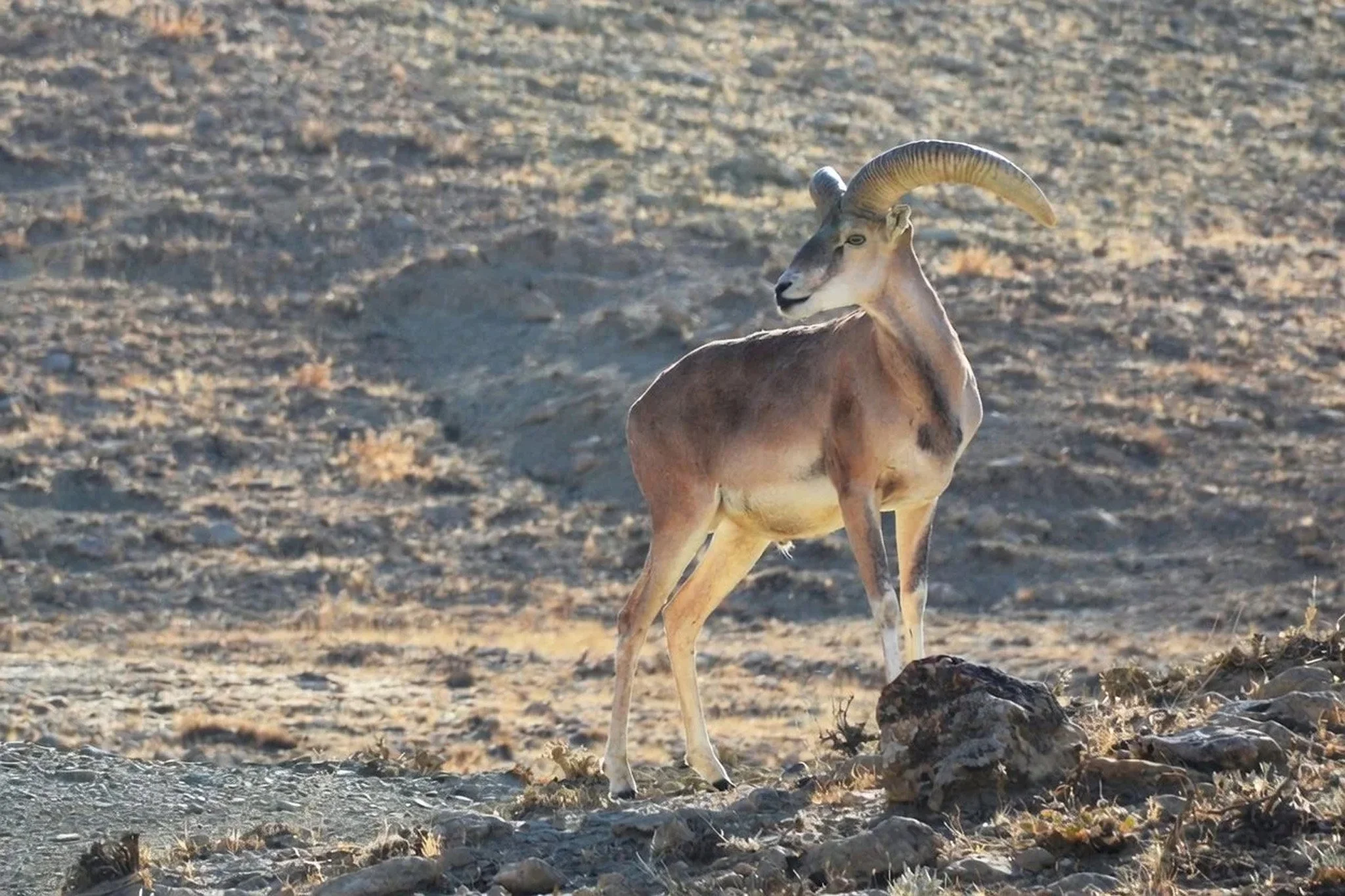
Armenian mouflon (Ovis gmelini), Iran population. Photo: [Mohammad Amin Ghaffari] / iNaturalist (CC BY 4.0)
AT A GLANCE
-
The Armenian Mouflon belongs to the Bovidae family, which includes wild sheep, goats, and other mountain ungulates. These animals are important grazers, shaping vegetation and supporting predator populations in their ecosystems.
-
This species is primarily a grazer but will also consume shrubs and low-growing vegetation. Its flexible diet allows it to survive in the harsh, dry environments of rocky hills and semi-deserts.
-
Armenian Mouflon are attracted to open, rugged terrain with sparse vegetation, where their agility and keen senses help them avoid predators. These habitats provide both food and natural cover.
-
During the breeding season (October–December), males engage in dramatic clashes with their heavy, curved horns to establish dominance and win access to females. This behavior is central to the species’ social structure and reproductive success.
-
Single births are most common, timed to coincide with better food availability in spring, increasing the likelihood of lamb survival.
QUICK FACTS
-
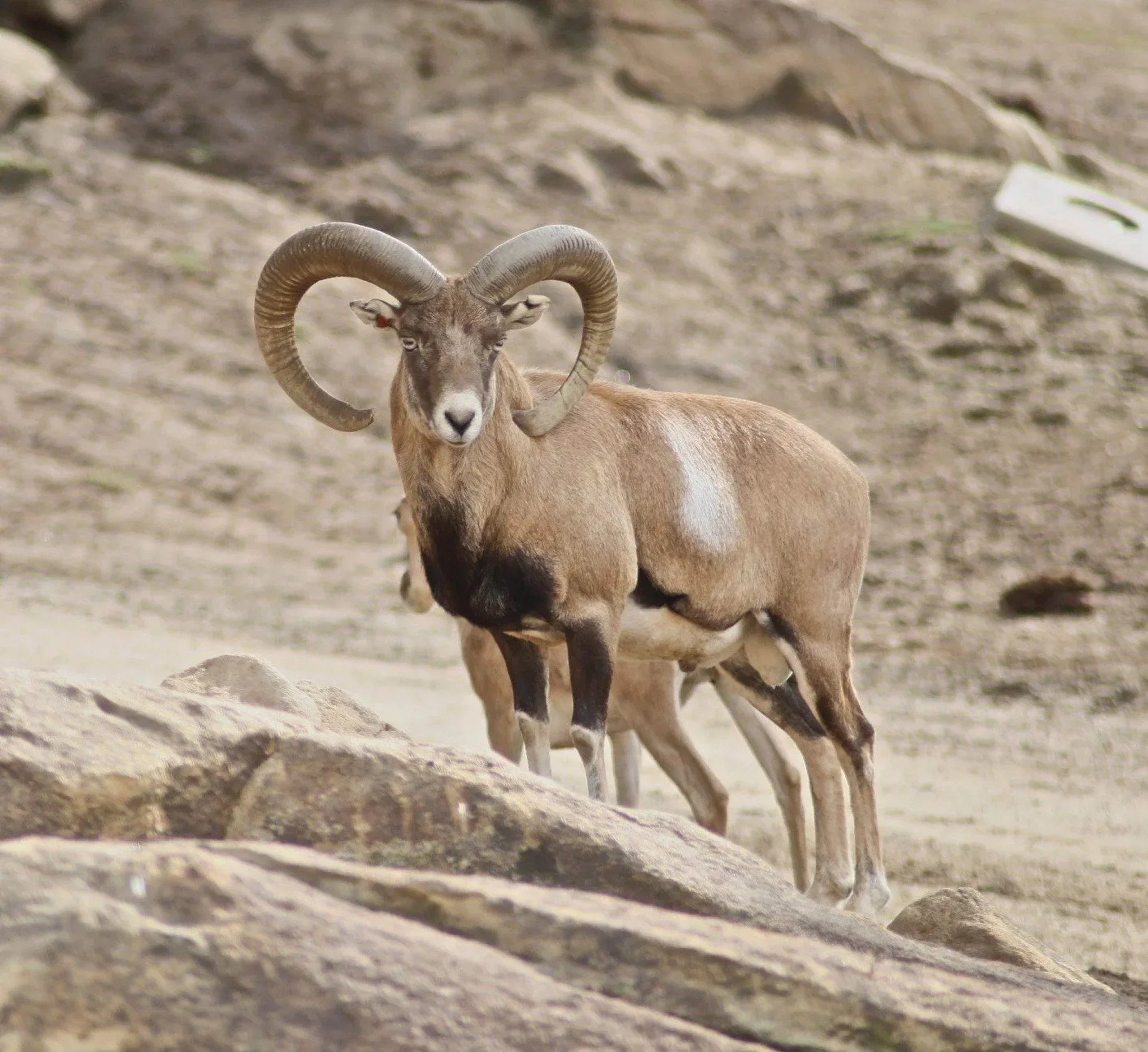
Males’ impressive horns are used in combat and as visual signals of strength. They are heavy, tightly curved and measure up to 85 cm. Female horns are smaller but still serve defensive and navigational purposes.
-
Males ~ 50 kg
Females ~ 35 kg
Males are larger than females, reflecting the species’ sexual dimorphism and the physical demands of rutting contests.
-
The Armenian Mouflon typically lives up to 8–12 years in the wild. Survival depends on avoiding predators, hunting, and extreme environmental conditions typical of their arid habitats.
-
Armenian Mouflon are an important prey species in their ecosystem, supporting both medium and large carnivores. A few of their most prominent predators are wolves, leopards, lynx, and golden jackals.
GEORGIA STATUS
-
0 Individuals in Georgia
1,900–2,000 individuals in the Caucasus
Unfortunately, the Armenian Mouflon no longer lives in Georgia, a stark example of local extinction due to overhunting and habitat loss. Populations persist mainly in Armenia, the Nakhchivan region of Azerbaijan, and northwest Iran. These small, fragmented populations are vulnerable to further decline.
-
Hunting is prohibited!
Armenian Mouflon is legally protected in most of its remaining range. Hunting is strictly controlled or banned in countries like Armenia, Nakhchivan (Azerbaijan), and northwest Iran, and several populations occur within protected areas and reserves. However, enforcement can be inconsistent, and poaching and competition with livestock continue to pose serious threats to their survival.
-
Illegal hunting, competition with domestic livestock for forage, and the degradation of natural habitats remain the biggest threats. Fragmentation and small population size make recovery challenging without targeted conservation measures.
RESTORE THE ARMENIAN MOUFLON
With WG’s 100% model, your entire gift goes to support boots on the groundfield programs in the Caucasus Mountains.
NEWS & STORIES
-

A forgotten wild at the crossroads of continents
Blog - 3 mins read
-
Why Conservation Must Pay for Itself
Blog - 3 mins read
-
Conservation Through Hunting
Blog - 3 mins read