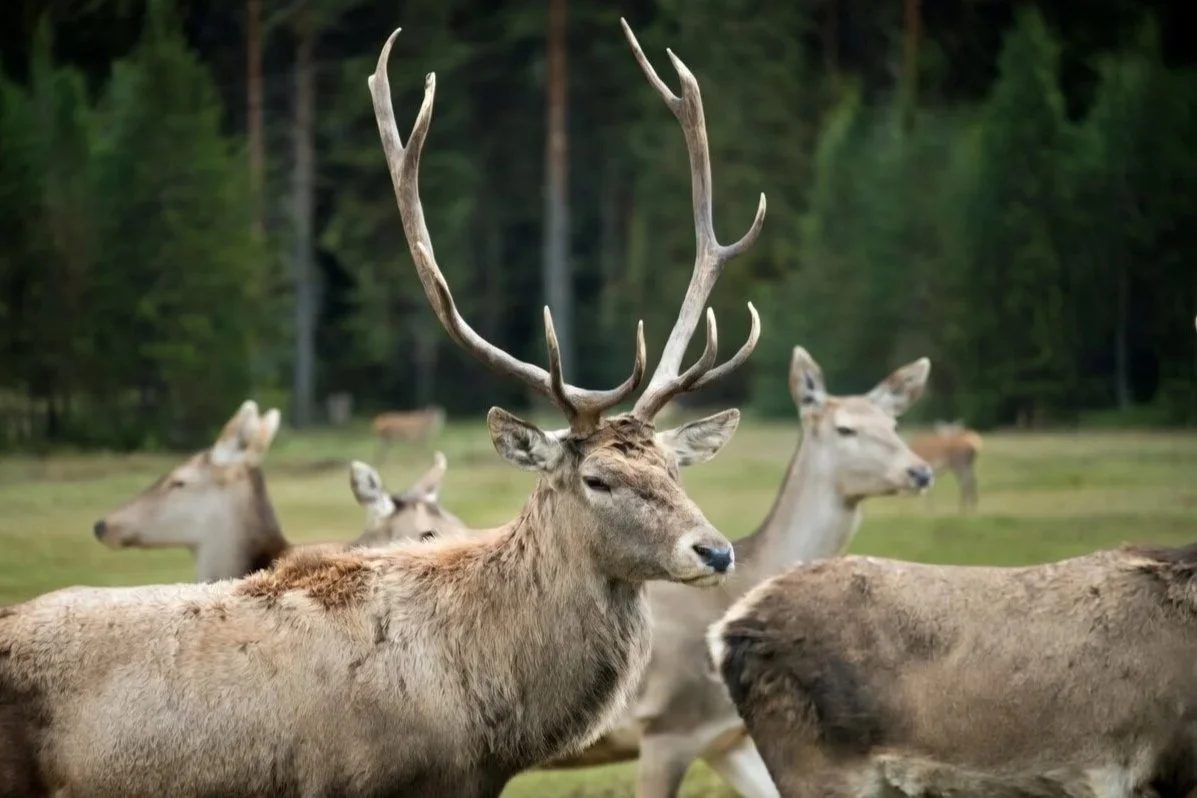
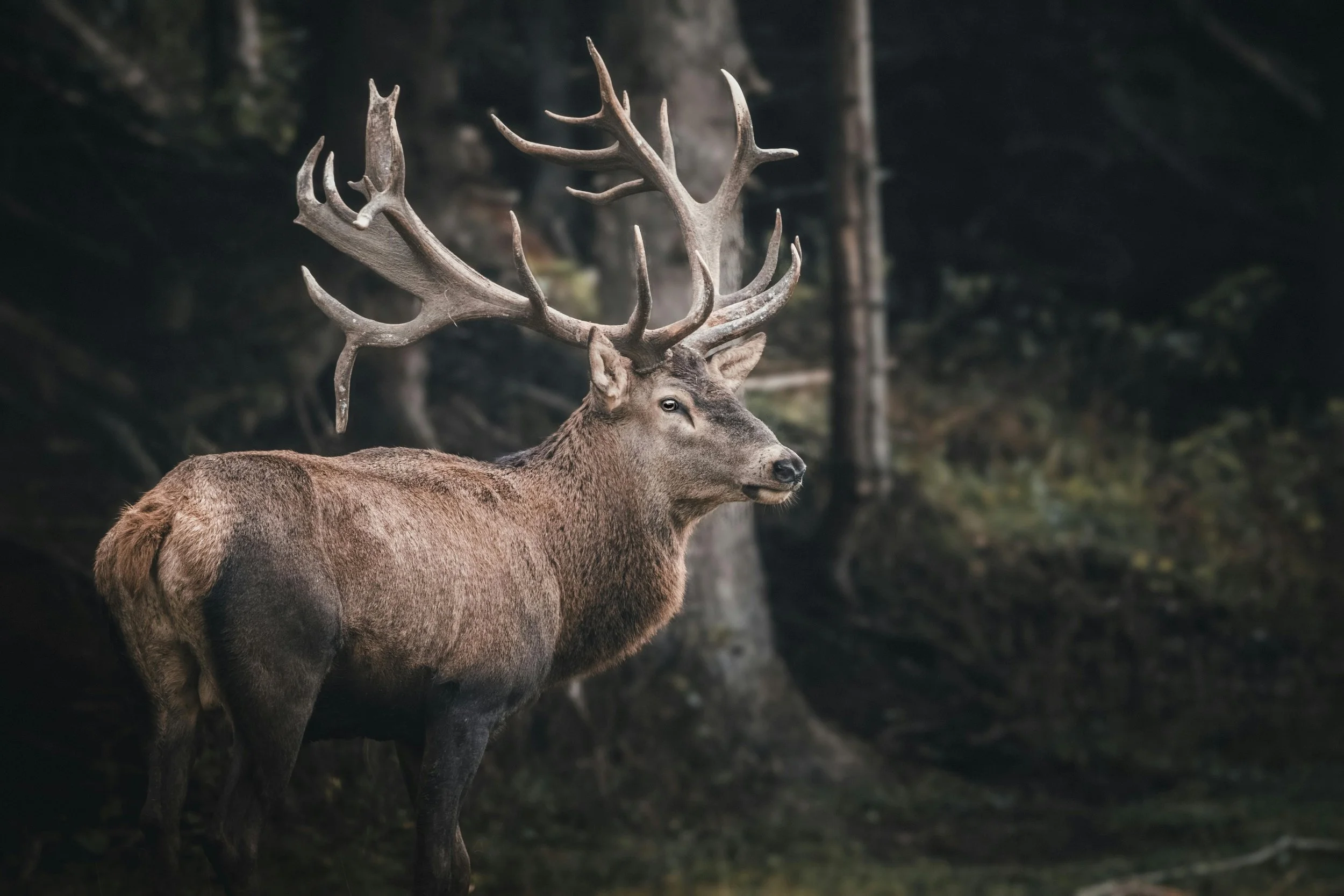
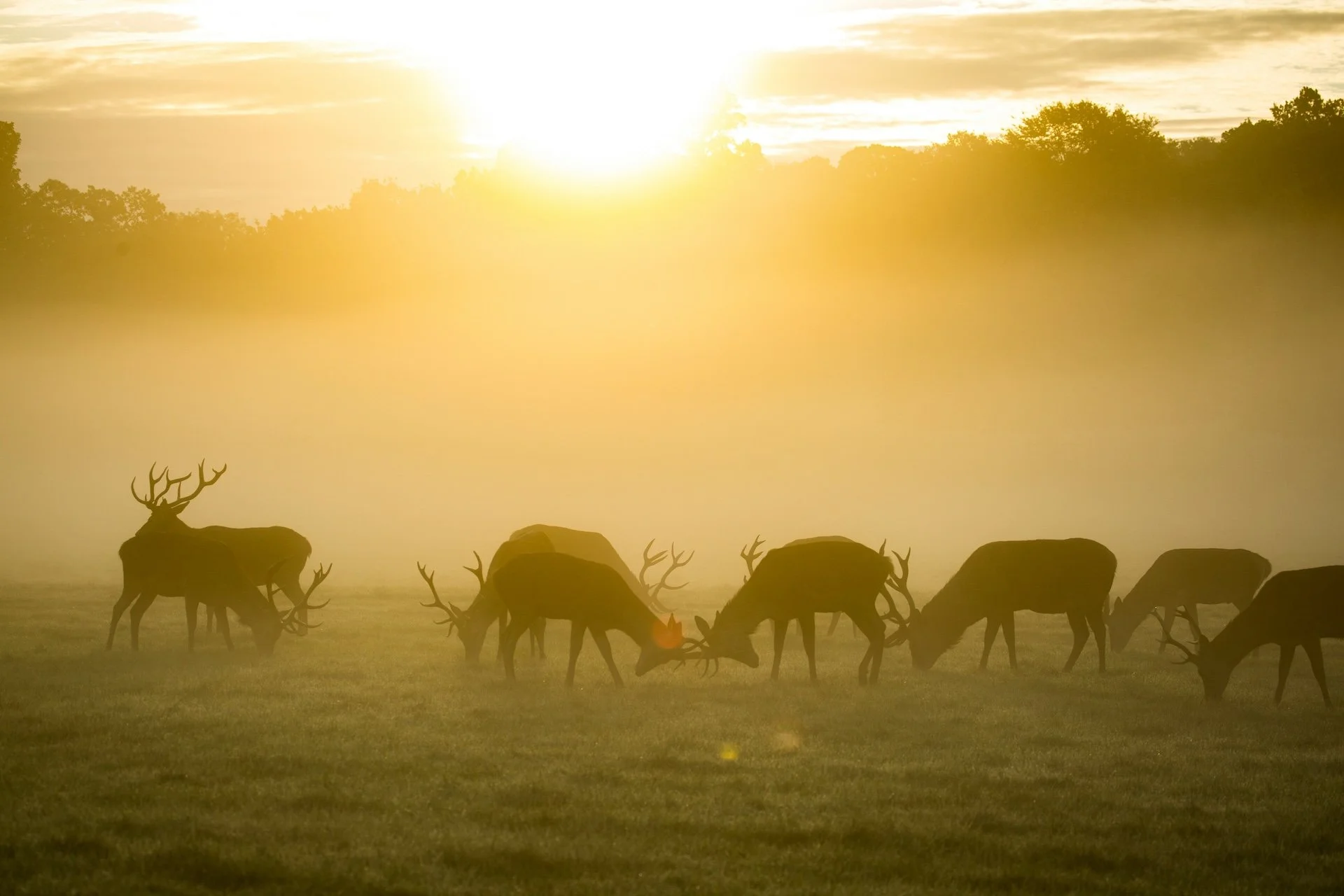
Or (Cervus elaphus maral) is a large deer of mixed forests and montane valleys in the Caucasus, known for stags’ impressive antlers. Protected in Georgia and the region, it faces threats from poaching, disturbance, and habitat loss.
Caspian Red Deer
AT A GLANCE
-
The Caspian Red Deer belongs to the Cervidae family, which includes all deer species. These large herbivores play a key role in forest and montane ecosystems, shaping vegetation and providing prey for large carnivores.
-
Caspian Red Deer are primarily grazers but will also feed on shrubs and tree foliage when available. Their flexible diet allows them to adapt to seasonal changes in forest and valley habitats.
-
They inhabit forested slopes and river valleys at various elevations, using dense vegetation for cover and open areas for grazing. These habitats provide food, shelter, and protection from predators.
-
During the breeding season (September–November), mature stags compete for dominance by defending harems of females. Antler clashes and vocal displays determine mating success. Male Caspian Red Deer make a distinctive “roar” vocalization during the rut. The sound helps males communicate their presence to females in the area and also marks the boundaries of a stag’s territory to other lurking males.
-
Endangered (IUCN Red List)
The species has declined across much of its historic range due to over hunting and habitat loss, making ongoing conservation crucial.
QUICK FACTS
-
Mature stags develop large, branching antlers used in combat during the rut. Antlers are shed annually and regrown each summer, a process linked to seasonal hormones and nutrition.
-
Males (Stags) ~ 170-240 kg
Females (Hinds) ~ 120-150 kg
Males are larger than females, reflecting sexual dimorphism that supports competition during the rut.
-
The Caspian Red Deer typically lives up to 12–18 years in the wild. Survival depends on avoiding predation, poaching, and environmental pressures. Well-managed populations in protected areas can reach the upper end of this lifespan.
-
Caspian Red Deer are important prey for large carnivores in the Caucasus, though predation pressure is limited in some areas due to human activity. A few of their most prominent predators are wolves, brown bear, and leopards.
GEORGIA STATUS
-
400–600 individuals (2022)
Populations in Georgia are small but relatively stable, concentrated in specific protected areas and strongholds.
Strongholds:
Borjomi-Kharagauli (BKhPA) ~45
Lagodekhi (LPA) ~50
Tusheti ~50
Gardabani ~30
-
Hunting is prohibited!
In Georgia, hunting is prohibited in protected areas, and populations are monitored in strongholds like Borjomi-Kharagauli, Lagodekhi, and Tusheti.
Across the Caucasus region, protection varies by country, but many populations occur within national parks or reserves where hunting is restricted, and conservation programs aim to reduce poaching and manage habitat fragmentation.
-
Illegal hunting, human activity, and habitat fragmentation remain the primary threats. Maintaining connected habitats and reducing disturbance are critical for population recovery.
RESTORE THE CASPIAN RED DEER
With WG’s boots-on-the-ground model, your gift goes to support active field programs in the Caucasus Mountains.
NEWS & STORIES
-
A forgotten wild at the crossroads of continents
Blog - 3 mins read
-
Why Conservation Must Pay for Itself
Blog - 3 mins read
-
Conservation Through Hunting
Blog - 3 mins read